
A surprising number of people cannot tell the difference between real and AI-generated faces. In experiments shared by photography communities and researchers, many participants misidentified synthetic faces as real more than half the time. The rise of AI headshot generators means job seekers, influencers, and entrepreneurs can produce studio-style portraits in minutes, but it also raises an obvious question: how can you detect a fake AI headshot? Understanding the signs matters for recruiters verifying profiles, brands protecting authenticity, and users who want trustworthy images online. Platforms like The Looktara Lens show how AI can be used responsibly for professional imagery, but knowing how detection works helps you judge any image you see on LinkedIn, dating apps, or social media.
Why AI Headshots Have Become So Convincing
Modern AI headshots are built using advanced generative models that learn patterns from millions of images. Many of these systems originate from Generative Adversarial Networks (GANs), a machine learning approach where two neural networks compete to produce increasingly realistic results. According to the original GAN framework described by Ian Goodfellow and colleagues, one model generates images while another tries to detect fakes, improving both over time.
That competitive training process produces extremely detailed faces. Skin pores, natural lighting gradients, and realistic eye reflections are now common outputs.
According to a 2024 survey on generative AI security published in IEEE Access, rapid advances in generative models have made synthetic images "nearly indistinguishable from real photographs without forensic analysis." (Golda et al., 2024)
Key Technologies Behind AI Headshots
Several AI techniques contribute to the realism you see today:
- GAN-based models that synthesize realistic facial structures
- Diffusion models used by tools like Midjourney and Stable Diffusion
- Face reconstruction models trained on celebrity and stock photo datasets
- AI retouching layers that automatically smooth lighting and skin
Creators now generate professional portraits without expensive photography sessions. Tools like the AI resume headshot generator illustrate how AI can produce professional profile photos quickly while maintaining consistent lighting and backgrounds.
Why Humans Often Fail to Spot Fake Faces
Humans rely heavily on emotional cues when judging faces. AI models exploit this by producing symmetrical features and clean lighting, which our brains interpret as trustworthy.
Research discussed in studies on AI ethics and psychology suggests people tend to trust polished images more than imperfect ones (Bonnefon, Rahwan & Shariff, 2023). Ironically, the perfection of AI faces can make them seem more believable than real photos.
Common Visual Clues That Reveal AI Generated Headshots
Even though AI portraits look realistic, subtle details often reveal the truth. Most synthetic headshots still struggle with small objects and background consistency.
Facial Details That Often Look Artificial
Look closely at micro-details. AI sometimes smooths or blends features in ways real cameras do not.
- Skin appears over-smoothed or plastic-like
- Teeth look unusually symmetrical
- Eye reflections differ between eyes
- Hair strands merge unnaturally
- Earrings or glasses distort near edges
These details appear because the model generates pixels based on patterns rather than capturing a real physical object.
Background and Clothing Inconsistencies
Background objects remain one of the easiest ways to detect AI imagery.
AI models frequently misinterpret objects such as furniture, windows, or text.
- Blurry or warped background shapes
- Clothing seams that suddenly change direction
- Logos or text that appear distorted
- Uneven lighting on shoulders vs background
Professional generators try to control these issues by limiting environments. For example, systems used for marketing graphics, such as a Shopify YouTube thumbnail AI generator, often use simpler compositions to reduce artifacts.
Technical Forensics: How AI Detection Tools Analyze Images
Visual inspection works for quick checks, but professionals increasingly rely on forensic analysis. AI detection software studies pixel patterns invisible to the human eye.
Signals Detection Algorithms Look For
Detection tools scan image metadata and pixel distributions to identify synthetic generation.
- Frequency patterns that differ from camera sensors
- Noise signatures missing from AI images
- Compression artifacts inconsistent with real photography
- Metadata clues revealing editing or generation tools
Deepfake detection research, including surveys of synthetic media detection techniques, shows algorithms can identify statistical patterns created during generation (Khanjani et al., 2023).
Many detection systems compare pixel frequency patterns to those produced by real camera sensors, which AI models rarely replicate perfectly.
Comparison of Popular AI Image Detection Methods
AI Detection Techniques Used in 2026
| Detection Method | How It Works | Accuracy Range |
|---|---|---|
| Pixel frequency analysis | Examines unnatural statistical patterns in image pixels | 70-90% |
| GAN fingerprinting | Identifies artifacts specific to generative models | 65-85% |
| Metadata analysis | Checks camera data and editing traces | 50-75% |
| AI classifier models | Uses machine learning to classify real vs synthetic | 75-92% |
Accuracy varies because generators constantly improve. A model trained to detect last year's diffusion outputs might struggle with newer ones.
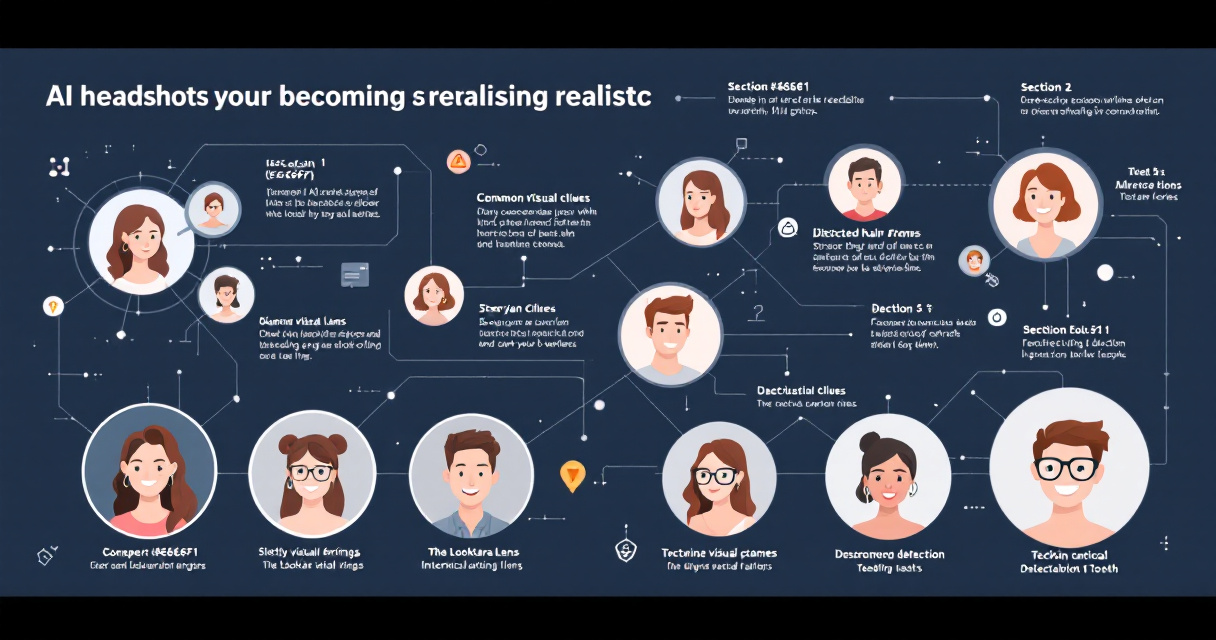
Real vs AI Headshots: A Quick Visual Comparison Checklist
Recruiters and content moderators often rely on quick heuristics before deeper analysis.
Quick Signs a Headshot Might Be AI Generated
Use this checklist when reviewing a suspicious profile image.
- Perfect skin texture without natural pores
- Background blur that looks painted rather than lens-based
- Odd reflections in glasses or eyes
- Clothing edges melting into the background
- Asymmetrical earrings or jewelry
Multiple clues together strongly suggest AI generation.
Where AI Headshots Are Commonly Used
AI headshots appear across many platforms, sometimes for legitimate reasons.
- LinkedIn profile photos
- Startup founder bios
- Remote worker directories
- Dating profiles
- Marketing graphics
Creative AI tools are also expanding beyond portraits. Platforms producing visual assets, like a Pinterest pin AI generator for fitness brands, show how generative images are used for marketing design rather than identity representation.
Video: Why AI Generated Content Is Getting Harder to Spot
Experts studying generative media often demonstrate how difficult detection has become.
Expert Discussion on AI Generated Media
As synthetic media expands across audio, video, and images, researchers warn that human perception alone may not be reliable. Detection increasingly depends on specialized tools and digital verification systems.
Ethical Questions Around Using AI Headshots
AI portraits are not automatically deceptive. Many professionals use them to improve lighting, remove distractions, or create a consistent visual brand.
Still, ethical concerns arise when AI headshots are presented as traditional photographs without disclosure.
Key Ethical Concerns
- Identity authenticity: Fake personas could be created for scams
- Professional transparency: Employers may prefer real photos
- Data privacy: Some generators train on scraped images
The IEEE survey on generative AI security highlights growing privacy risks when models train on large public datasets without clear consent (Golda et al., 2024).
Transparency matters more than the technology itself. The ethical issue appears when synthetic images misrepresent identity.
What to Expect From AI Headshot Detection by 2027
Detection tools will evolve quickly as generative models improve. Several emerging solutions may reduce confusion between real and synthetic images.
Digital Watermarking and Authenticity Signatures
Major AI companies are testing watermarking systems that embed invisible markers into generated images. These markers allow platforms to verify whether an image was produced by AI.
Organizations like the Content Authenticity Initiative are pushing for image provenance standards that track editing history.
AI vs AI: The Detection Arms Race
Future detection will rely heavily on machine learning.
- Detection models trained on billions of synthetic images
- Browser extensions that flag suspected AI portraits
- Platform-level verification for profile images
Creative tools will still grow. Platforms like The Looktara Lens continue developing AI imagery tools while emphasizing controlled outputs for marketing and professional branding.
You can already see this expansion across design tools such as a Shopify website hero AI generator or a LinkedIn post AI generator for fitness brands, which create visuals where authenticity concerns are lower because the images represent concepts rather than identities.
Conclusion
AI-generated headshots are becoming nearly indistinguishable from real photos, yet subtle clues still reveal many of them. Pay attention to unnatural skin smoothing, distorted accessories, inconsistent lighting, and suspicious metadata. When accuracy matters, combine human observation with AI detection tools.
AI imagery will continue expanding across marketing, social media, and professional branding. Used responsibly, it can save time and produce strong visuals without expensive photo shoots. Platforms like The Looktara Lens demonstrate how AI tools can support creators while maintaining transparency about how images are generated.
If you want professional visuals without traditional photography costs, explore AI-powered design and headshot tools, but always review outputs carefully and ensure your images represent you authentically.