
Your headshot often speaks before you do, and for financial advisors, that first impression can affect trust fast. A financial advisor is a professional who provides financial services based on a client's financial situation, a definition reflected in Wikipedia's overview, so your image needs to signal competence, stability, and approachability from the first glance. In 2026, many advisors are turning to AI headshots to refresh LinkedIn, firm bios, and prospecting materials without the delay and cost of a studio session. Platforms like The Looktara Lens make that process faster, but speed alone isn't the goal. The real goal is a portrait that feels credible enough for compliance-minded finance, and human enough to earn a second look.
Why AI headshots matter more for advisors than for most professionals
Financial advice is a trust business. Prospects compare credentials, fees, specialties, and often your photo before they ever reply to an email. That gives your headshot more weight than it might have in other fields.
Research on AI and human judgment helps explain why. The Moral Psychology of Artificial Intelligence examined how people evaluate AI-related decisions and moral tradeoffs. While it is not a headshot study, it supports a practical point: people don't respond to AI outputs only on technical quality, they also react to fairness, intent, and trust. For advisors, that means an AI-generated portrait has to feel honest, not polished to the point of suspicion.
Key takeaway: A financial advisor's AI headshot succeeds when it looks professional without looking fictional.
Where advisors usually use these images
A single strong image can appear in many places:
- LinkedIn profile and cover assets
- RIA or firm team pages
- FINRA-related professional profiles where allowed by your firm's standards
- Webinar registration pages
- Email signatures and newsletters
- Conference bios and speaker decks
A polished portrait also pairs well with supporting brand assets, such as a LinkedIn post generator for professional updates or a website hero image generator for advisor sites.
What clients read from a photo in seconds
People make quick judgments from visual cues like posture, eye contact, clothing, lighting, and background. Implicit Communication Through Social Distancing explored how visual spacing and presentation communicate social meaning. That matters for headshots because even small visual choices can imply warmth, distance, formality, or status.
For finance, the best images usually land in the middle. Too casual can look unprepared. Too severe can feel cold. Your photo should fit your niche, retirement planning, wealth management, insurance, tax strategy, or startup advisory, while still feeling consistent with the expectations of a regulated profession.
Why trust cues matter in wealth management visuals
Advisors sell judgment as much as services. A sharp AI image can help reinforce reliability, but only if the styling matches how you actually show up with clients. If you meet clients on Zoom in a blazer and open collar, use that. If your firm is formal, match the standard.
What a good AI headshot for a financial advisor actually looks like
Not every attractive portrait is a useful advisor headshot. Finance clients often look for signs of steadiness more than creativity, so image choices should support that expectation.
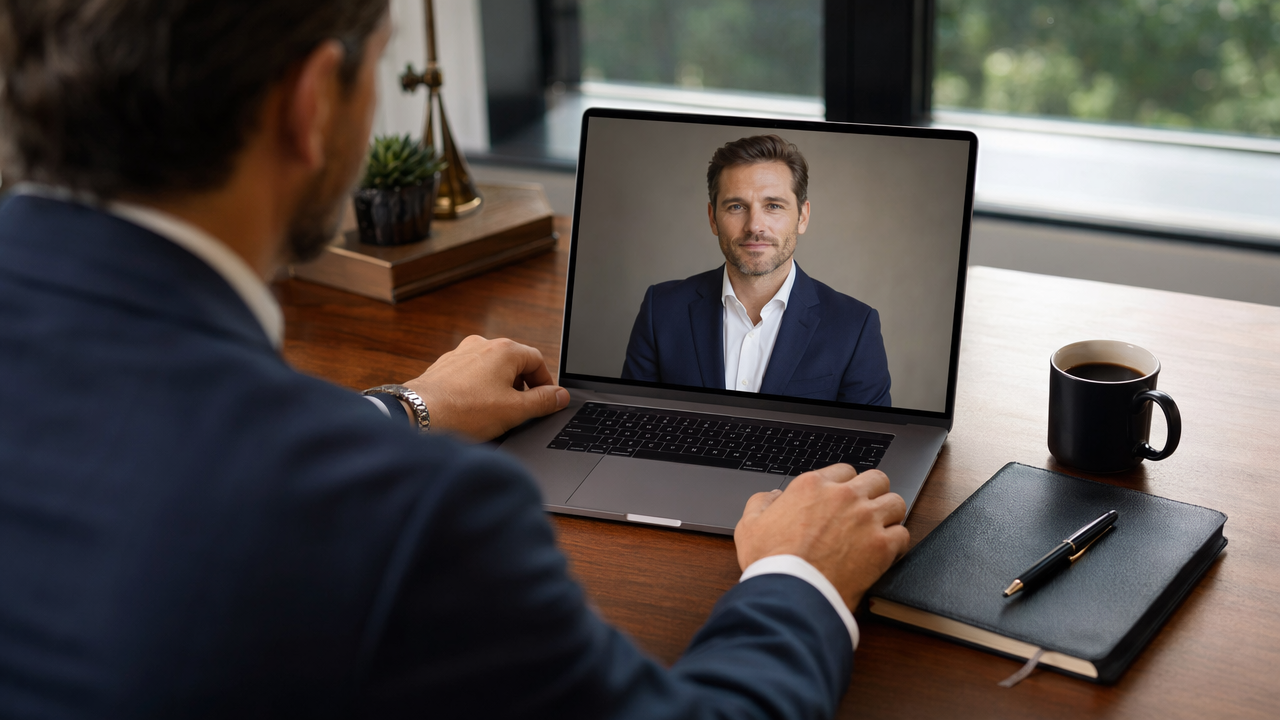
The visual traits that usually work best
The safest and strongest advisor headshots tend to share a few traits:
- Neutral or softly blurred office-style backgrounds
- Natural facial expression, slight smile works for many advisors
- Clean grooming and simple wardrobe choices
- Realistic skin texture and lighting
- Framing from chest or shoulders up
- Eye contact directed toward the camera
Table: Best-fit style choices for different advisor brands
| Advisor type | Best clothing choice | Background style | Expression to aim for |
|---|---|---|---|
| Independent RIA | Blazer with open collar or professional blouse | Clean office or neutral indoor scene | Calm and approachable |
| Corporate wealth advisor | Suit or structured businesswear | Soft corporate background | Confident and composed |
| Retirement planner | Professional but slightly less formal attire | Warm neutral background | Reassuring and friendly |
| Content-driven advisor | Polished smart casual | Studio-neutral or office backdrop | Engaged and personable |
Red flags that make AI photos look fake
Many AI portraits fail for predictable reasons. Watch for:
- Overly smooth skin or plastic texture
- Unnatural teeth, earrings, collars, or hands visible in frame
- Background blur that cuts oddly around hair
- Luxury-office scenes that don't match your real practice
- Extreme retouching that makes you look 15 years younger
Use realism as your filter. If a prospect would be surprised by how different you look on a Zoom call, the image is working against you.
If you're updating more than a headshot, visual consistency matters. Advisors building a broader personal brand may also want a matching logo generator for simple professional branding or a pitch deck slide generator for presentations.
Matching the image to the platform
LinkedIn rewards a slightly warmer image than a compliance-heavy firm bio page. A conference speaker profile may support a little more personality. Your email signature photo may need tighter cropping than your website bio.
Using The Looktara Lens for multiple versions can help because you're not forced into one crop and one tone for every channel. The goal is consistency, not identical files everywhere.
A simple rule for wardrobe and background choices
Dress one level above your average client meeting, and choose a background one level simpler than you think you need. That usually produces a more believable result than trying to look ultra-luxury or ultra-creative.
How to create an AI headshot without hurting credibility
The promise of AI headshots is speed, but the process still matters. Financial advisors should treat image generation like any other client-facing asset: useful, reviewable, and aligned with brand standards.
A practical workflow that keeps images believable
- Start with recent selfies or portraits in good light.
- Upload varied angles, but keep grooming close to your current look.
- Choose prompts or styles that fit finance, not fashion editorials.
- Generate several versions with small differences in attire and background.
- Review images on desktop and mobile before picking finalists.
- Ask a colleague whether the photo looks like you on your best day.
- Keep one conservative version for formal use and one warmer version for social channels.
Why "authentic enough" is the real standard
The Distance Cure looked at mediated connection and how people experience presence through technology. For advisors who meet prospects online, that idea matters. Your headshot is not just decoration, it is part of how presence is built before a meeting happens.
That's why a slightly imperfect but believable image often outperforms a hyper-polished one. Clients want reassurance that the person in the photo is the same person who will guide a retirement plan or explain market risk.
Common objections advisors have
Some advisors still hesitate, and that's fair. Here are the usual concerns:
- "Will it look fake?" It can, if you choose aggressive retouching or unrealistic scenes.
- "Is a studio still better?" Sometimes yes, especially for executive teams or major rebrands.
- "Will clients care?" They may not name it directly, but they notice when a photo feels old, low quality, or inconsistent.
- "Can I use it across channels?" Usually yes, if it matches your firm's marketing and compliance rules.
For solo advisors or fast-moving teams, The Looktara Lens can be a practical option when you need updated photos quickly for recruiting, content, and digital profiles. If you're also job-seeking inside the industry, a dedicated resume headshot AI generator can help you tailor a more formal version.
The review checklist before you publish anything
Before uploading the final image, compare it against your real face, your current haircut, your everyday glasses if you wear them, and your firm's tone. Then zoom in. Most bad AI headshots fail in the details.
Compliance, disclosure, and brand-fit questions advisors should ask
Financial services marketing has more guardrails than most industries. Even if your firm allows AI-generated imagery, you still need to think about representation, consistency, and approval workflows.
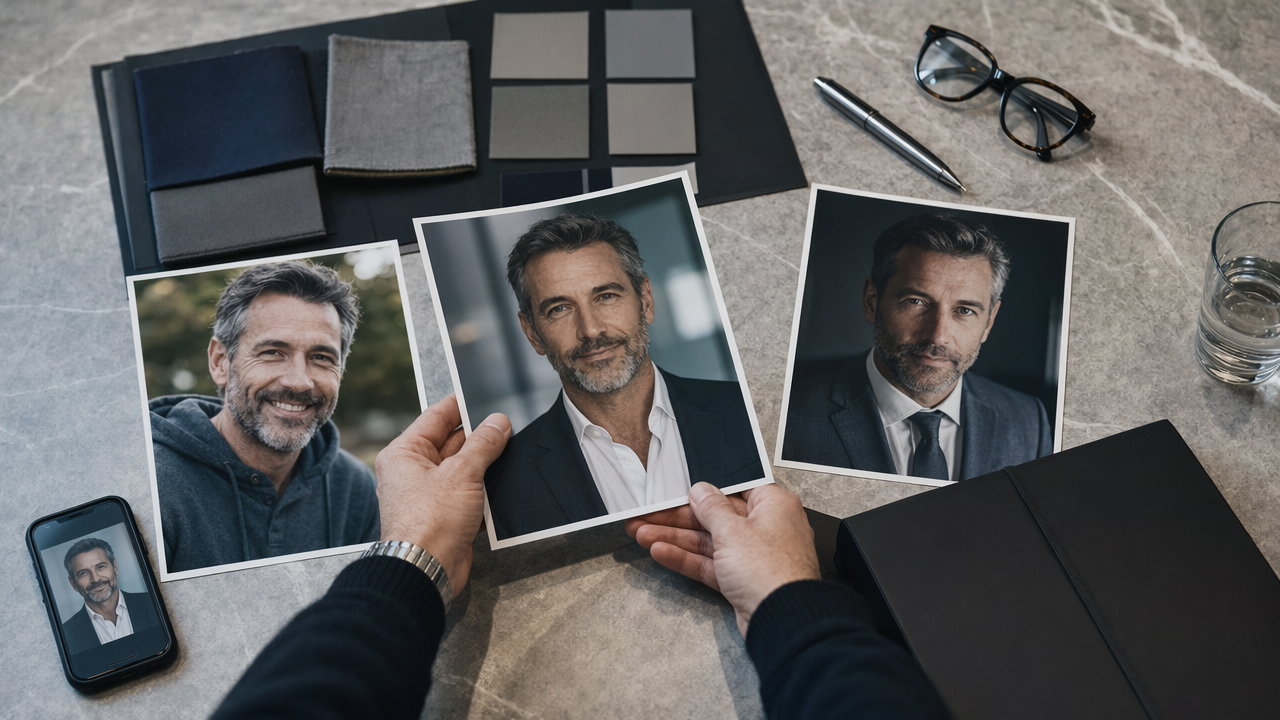
Questions to clear internally first
Use these questions before rolling out a new image:
- Does the photo accurately represent your current appearance?
- Does your firm require marketing review or archiving of profile updates?
- Are there rules for advisor bios, branch pages, or testimonial-adjacent layouts?
- Will this image appear beside regulated language or disclosures?
- Does the style match the rest of the firm website?
FAQ for financial advisors considering AI headshots
Are AI headshots acceptable for financial advisors? Often yes, if they are truthful, professional, and aligned with firm policy. Internal review matters more than trendiness.
Should I tell people the image was AI-generated? There is no universal rule in the research provided, so the safest approach is to follow your firm's marketing standards and avoid images that materially misrepresent your appearance.
Can I use the same headshot on LinkedIn and my firm bio? Usually yes, but crop and file size may differ. Some firms prefer a more formal version for corporate pages.
Is AI better than a cheap local photographer? Not always. AI is often faster and more flexible, but a good photographer can still win on nuance and accuracy.
Practical rule: If the image creates doubt about authenticity, don't use it in a trust-first business like financial advice.
Advisors who publish frequently can also connect their photo refresh with broader content assets, such as a quote post generator for finance insights or a YouTube thumbnail generator for educational videos. That keeps your brand consistent across touchpoints.
Where firms often get this wrong
The common mistake is treating a headshot as a standalone asset. Clients don't see it in isolation. They see it next to your website copy, credentials, social posts, and booking flow. Any mismatch lowers confidence.
What to expect from AI headshots for advisors in 2027
This topic has a real near-term future because advisor marketing keeps moving online, and image tools are improving fast. The next phase is not just prettier portraits. It is better control, better consistency, and more scrutiny.
Three changes that are likely next
- More advisors will create channel-specific image sets instead of one universal headshot.
- Firms will likely build clearer internal rules around AI-generated staff photos.
- Clients may become more sensitive to images that feel overly synthetic as AI visuals become common.
Why the standard will probably get stricter, not looser
As AI images spread, "good enough" won't stay good enough. The winning headshots will be the ones that preserve trust cues, not the ones with the most dramatic polish. In practice, that means more demand for subtle editing, real likeness, and brand consistency.
The advisors who benefit most will be those who treat AI headshots as one part of a modern visibility system. That might include a refreshed LinkedIn image, a new site banner, cleaner webinar slides, and better short-form social graphics. Using The Looktara Lens alongside tools for visuals and profile content can make those updates feel coordinated instead of random.
A smart way to future-proof your profile image
Refresh your headshot when one of these happens:
- You change firms or start an independent practice.
- Your appearance has changed noticeably.
- Your current photo is more than a few years old.
- You're speaking more, publishing more, or showing up in media.
- Your online profiles no longer match each other.
That cadence keeps you current without chasing trends.
The advisors who should update first
If you still use a cropped wedding photo, a low-resolution conference snapshot, or a headshot from several jobs ago, you'll likely gain value quickly from a careful AI refresh.
Conclusion
A strong AI headshot for a financial advisor should do one job well: make you look like a credible professional clients can trust with serious decisions. That means clean styling, realistic details, platform-specific crops, and a final image that still looks like you in real life. If you're ready to update your LinkedIn photo, firm bio, or website presence, start with a small batch of realistic images, review them carefully, and keep the most believable version for formal use. To make the process faster, try The Looktara Lens and build a consistent visual set that supports your profile, content, and client-facing brand without the delay of a full studio shoot.
Generated by EarlySEO.com