
Your Microsoft Teams photo often speaks before you do, and a polished image can make remote meetings feel more human. If you need an AI headshot for Microsoft Teams profile picture, the goal is not glamour, it's trust: a clean, current image that fits how Microsoft Teams, the collaboration platform in Microsoft 365, is actually used for chat, meetings, and workplace identity. Tools like The Looktara Lens can help you turn everyday selfies into a profile-ready portrait without booking a studio, and if you're also refreshing your job materials, a matching AI resume headshot generator can keep your professional presence consistent across platforms.
What makes a Microsoft Teams headshot work in 2026
A strong Teams headshot looks real, recent, and easy to recognize in a small circular crop. Teams is built for collaboration, video calls, file sharing, and workspace chat, so your profile image functions like a quick identity marker as much as a personal brand asset. That means clarity matters more than dramatic lighting or heavy retouching.
Many top-ranking pages focus on "studio-quality" results, but they often skip the practical reality of how profile photos are viewed inside apps. In Teams, people usually see your image at thumbnail size beside messages, meeting rosters, and calendar invites. A simple composition wins.
Key takeaway: the best photo for Teams is the one coworkers can recognize instantly, even at small size.
The traits that matter most
- Centered face with shoulders visible
- Neutral or lightly blurred background
- Natural expression, usually a slight smile or calm look
- Work-appropriate clothing that matches your field
- Consistent likeness to how you appear on video calls
A 2024 survey paper on generative AI applications notes how widely image generation and enhancement tools are being used across creative and practical tasks, which helps explain why AI portraits are now common in professional settings, not just social media experiments. See A Survey of Generative AI Applications.
For people building a broader personal brand, matching visuals across channels can help. If you also create thought-leadership content, a coordinated look between your Teams image and a LinkedIn post AI generator workflow can make your presence feel more intentional.
How to create an AI headshot for Microsoft Teams profile picture without looking fake
The best way to create a believable AI portrait is to start with ordinary, honest source photos. Competitor pages promise instant transformation, but the safer approach is to give the AI enough variety to preserve your real features instead of inventing them.
The best input photos for accurate results
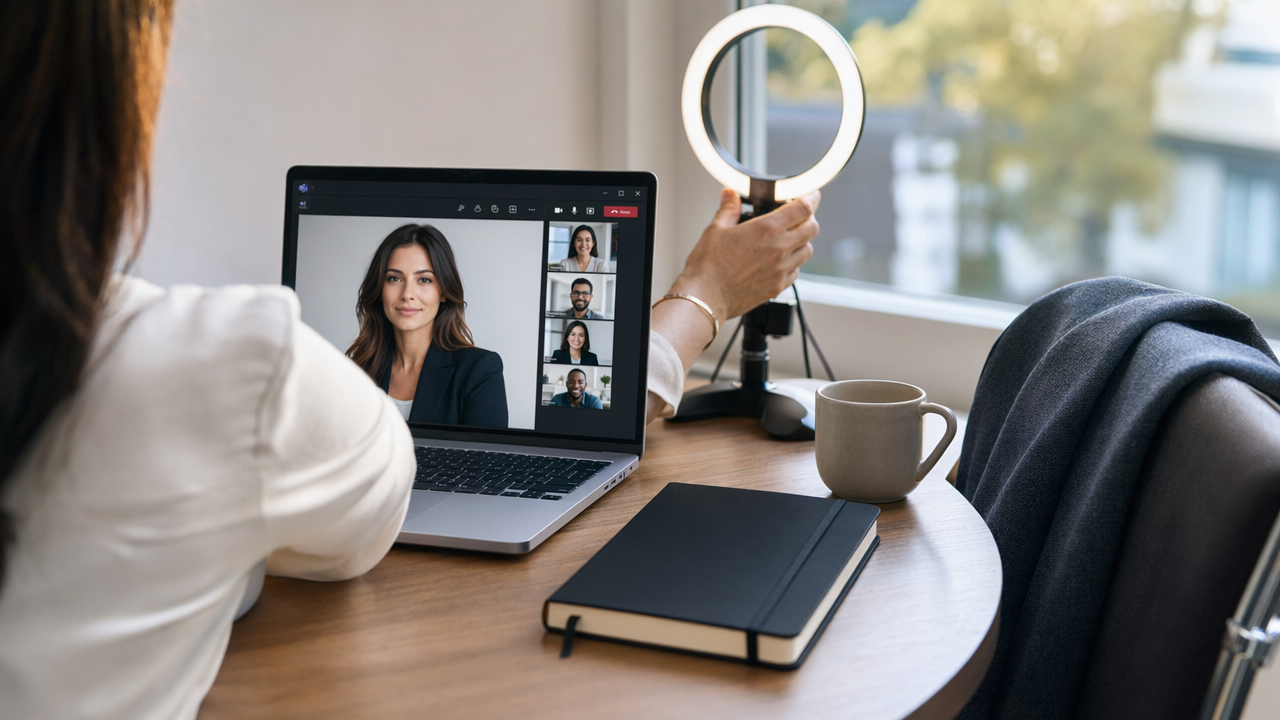
Use selfies or phone portraits with even lighting, no heavy filters, and several angles. Include both neutral and slightly smiling expressions. Avoid sunglasses, extreme poses, and group shots.
A practical setup checklist
- Take 8 to 15 recent photos in daylight.
- Wear tops you'd actually wear to work.
- Keep hair and facial hair close to your current look.
- Choose plain walls or uncluttered rooms.
- Review outputs at small size before downloading your favorite.
Side-by-side: what to keep and what to avoid
| Element | Good choice for Teams | Risky choice |
|---|---|---|
| Expression | Relaxed, attentive | Overly serious or exaggerated smile |
| Clothing | Solid colors, simple layers | Busy patterns, flashy fashion |
| Background | Soft office, plain wall, neutral blur | Fantasy scene, neon colors, crowded room |
| Retouching | Light skin cleanup | Plastic skin, altered face shape |
| Crop | Head and shoulders | Too wide or too tight |
Research on data production and AI systems has also raised a useful reminder: outputs depend heavily on the data and human choices behind them. Milagros Miceli and Julian Posada's 2022 ACM paper examined those underlying processes, which is one reason careful input selection matters so much for identity-based images.
If you want a faster route, The Looktara Lens can help generate polished options from everyday photos while keeping the result suitable for professional platforms. You can also build a matching visual identity beyond your profile image with assets like a website hero AI generator if you run a freelance site or portfolio.
How The Looktara Lens handles professional Teams photos
The clearest advantage of The Looktara Lens is that it fits the real use case: turning personal photos into work-ready images that still look like you. That sounds obvious, but many image tools are tuned for art styles, dramatic avatars, or social-first aesthetics rather than corporate communication.
Where it fits better than generic image creators
A general AI image generator may create an attractive portrait, but it can also drift from your true features. For a Teams profile, drift is a problem because coworkers expect continuity between your profile photo and your live camera presence. The The Looktara Lens platform is more useful when your goal is credibility, not novelty.
Comparison: specialized headshot tool vs general image maker
| Option | Best for | Main strength | Main limitation for Teams |
|---|---|---|---|
| The Looktara Lens | Professional profile photos | Built around polished personal imagery | Depends on decent source photos |
| General AI art generator | Creative avatars and concepts | Fast style variety | Can invent unrealistic facial details |
| Traditional studio shoot | Formal executive portraits | Full photographer control | Higher cost and slower turnaround |
This matters because Teams photos live inside a work identity system tied to your Microsoft account. A Microsoft account acts as a single sign-on account across Microsoft consumer services and devices, so the image attached to it often carries across a wider set of professional touchpoints than people expect.
For founders and consultants, consistency across formats can save time. You might pair a Teams headshot with a matching pitch deck slide AI generator or use a coordinated logo AI generator for your personal brand when you want your profile, deck, and site to feel connected.
Best use case: choose a specialized headshot workflow when recognition and trust matter more than artistic flair.
Common mistakes that make AI profile photos fail on Teams
Most bad results fail because they look inconsistent with real life, not because they look low quality. A crisp image can still be a poor Teams photo if it feels staged, misleading, or hard to recognize in a tiny circle.

The biggest errors to avoid
- Picking a headshot that looks 10 years younger than you do now
- Using dramatic corporate backdrops that scream "generated"
- Over-smoothing skin and removing natural texture
- Wearing clothes you would never wear in a meeting
- Cropping so tightly that the image feels cramped in a circle
Another issue is context. Research on commercial proctoring systems in modern of Commercial Proctoring Systems and Their Use in Academic Online Exams shows how identity and image-based systems can become sensitive when appearance data is interpreted by software and by people. That's a different field, but the lesson still applies: your profile photo should reduce ambiguity, not increase it.
A quick self-check before you upload
Ask these questions:
- Would a teammate recognize me instantly from this image?
- Does this match how I appear on a normal webcam call?
- Does the background support work, rather than distract from it?
- Does the photo still look good as a small circle?
If the answer to any of those is no, choose another version. Before finalizing your image set, it can also help to think about how your brand shows up elsewhere, from a quote post AI generator for social content to other visual assets on looktara.com.
FAQ and next-step advice for choosing the right Teams-ready image
The right final photo is usually the one that looks slightly better than your webcam feed, not radically different from it. That balance helps you look polished while staying believable.
Frequently asked questions
Can I use an AI-generated headshot on Microsoft Teams? Yes, as long as it accurately represents you and fits your workplace norms. The safest choice is an AI-enhanced image based on your own recent photos.
What background works best? A plain background, soft office feel, or subtle blur usually works best. Busy or obviously synthetic scenes draw attention away from your face.
Should my Teams photo match LinkedIn? Usually yes. Matching or near-matching photos create consistency across professional platforms and reduce confusion.
What size and crop should I use? Use a sharp head-and-shoulders crop with your face centered. Check the circular preview before saving your final version.
A simple decision guide
| If you need... | Best choice |
|---|---|
| Fast upgrade from selfies | AI headshot workflow |
| Executive portrait for press or board use | Studio photographer |
| Creative avatar for casual communities | General AI image tool |
If you want to move quickly, start with one target use case: Teams first, everything else second. Build 3 to 5 options, test them at thumbnail size, and ask one trusted colleague which feels most like you. Then keep the same image family across LinkedIn, your email avatar, and any portfolio materials.
The Looktara Lens is a practical place to start if you want that polished-but-recognizable balance. Visit looktara.com when you're ready to create a work-ready portrait that doesn't feel overproduced.
Conclusion
A good AI headshot for Microsoft Teams profile picture should make you look credible, current, and easy to recognize, not overly perfected. Start with recent photos, keep styling simple, compare results at small size, and choose the image that feels most like your real meeting-day self. If you want a faster path to a profile-ready result, try The Looktara Lens, then carry that same visual style across your resume, LinkedIn, and client-facing materials so your professional identity stays consistent everywhere.
Generated by EarlySEO.com