
Trust sells wedding services fast, and your headshot often earns that trust before a couple reads a single word on your site. An AI headshot for wedding planners can help you create a polished portrait for LinkedIn, your website, speaker bios, and vendor directories without booking a full studio session every time. Tools in this category are now common across search results, with DataForSEO showing roughly 656,000 SERP results for this topic, which tells you demand is real and growing. If you want a faster way to build a clean, brand-ready image set, The Looktara Lens fits naturally into that workflow, especially when you also need supporting visuals like a resume headshot generator for career-facing profiles.
Why wedding planners benefit from AI portraits more than many other professions
Wedding planners benefit from AI portraits because their business depends on trust, style fit, and visibility across many platforms at once.
Couples rarely meet you first in person. They usually see your website, Instagram, vendor listing, LinkedIn profile, or a feature in a local publication. A polished portrait helps them decide if you feel organized, approachable, and premium enough for a high-stakes event.
This category is also crowded. The SERP research shows multiple ranking pages focused on fast, low-friction headshot generation, including tools from ExecHeadshots, Canva, and DreamShootAI. That pattern matters because it shows what users want right now: speed, affordability, and images that look professional enough for public-facing brand use.
Key takeaway: For planners, a headshot is not just a profile photo. It is a sales asset used across inquiry funnels, partner outreach, and personal branding.
Where one strong portrait gets used
- Website about page
- Wedding vendor directories
- LinkedIn and speaker bios
- Instagram profile and story highlights
- Press kits and podcast guest submissions
- Proposal decks for venues or brand partners
A good portrait also works beyond one image. Once you have a consistent face-forward brand shot, you can pair it with other creative assets, such as a LinkedIn post AI generator for thought-leadership content or a website hero AI generator for your homepage visuals. That matters for planners building a recognizable personal brand, not just updating one avatar.
Research on multimodal AI has also moved quickly. A 2024 paper, Gemini 1.5: Unlocking multimodal understanding across millions of tokens of context, examined how newer models process mixed media and large context windows. While that paper is not about wedding portraits specifically, it supports the broader shift toward stronger image-aware AI systems, which helps explain why image generation and editing tools have become much more usable by 2026.
What makes an AI headshot actually work for a wedding brand
An effective AI-generated portrait for a planner looks credible, warm, and aligned with the kind of weddings you want to book.
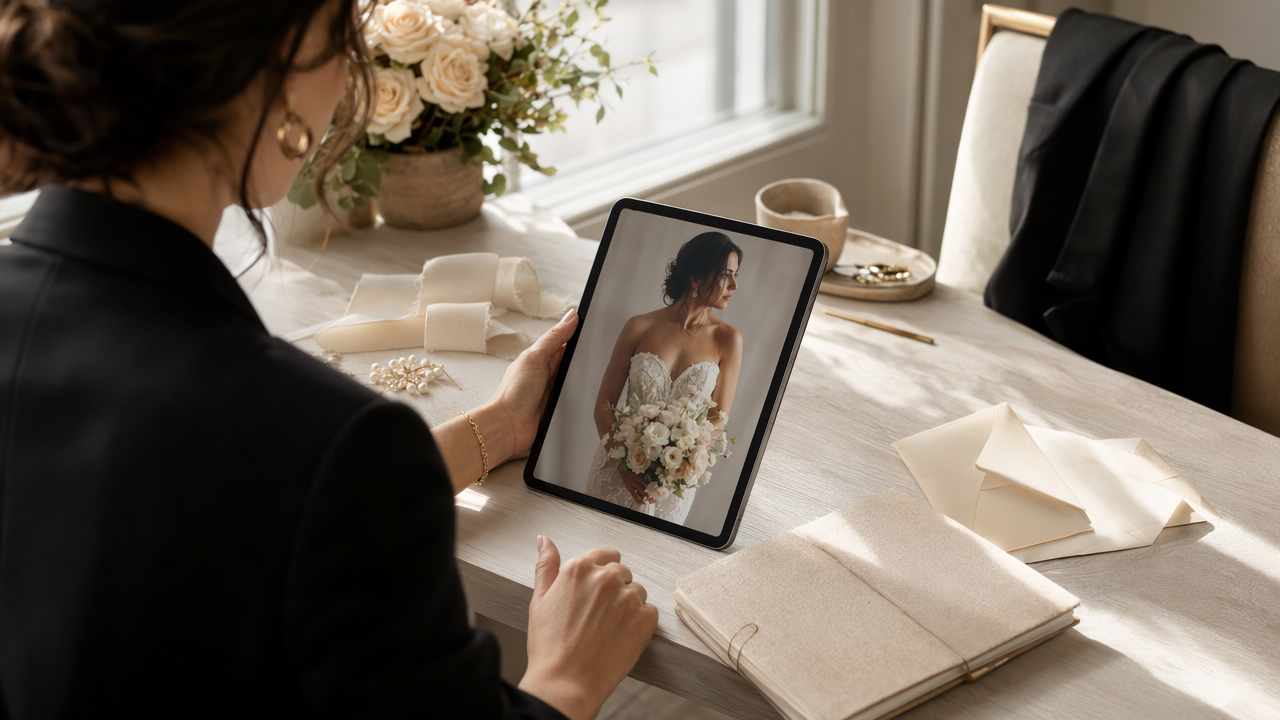
The biggest mistake is treating a wedding business like a corporate law firm. Your image should still look professional, but it needs more personality than a generic business portrait. Couples want confidence and taste, not stiff formality.
Traits that usually perform best
- Clear eye contact: makes you seem direct and trustworthy.
- Soft, natural expression: feels welcoming without looking casual.
- Brand-fit styling: modern, editorial, romantic, luxury, or approachable.
- Simple background: keeps attention on your face.
- Consistent wardrobe cues: neutrals often age better than trend-heavy outfits.
Comparison table: weak vs strong headshot choices for planners
| Element | Usually weak for planners | Usually strong for planners |
|---|---|---|
| Expression | Overly serious or forced smile | Relaxed, confident, warm |
| Outfit | Distracting prints, clubwear, overly formal suiting | Clean professional attire that matches your brand level |
| Background | Busy wedding venue details that clutter the frame | Soft studio or lightly styled backdrop |
| Editing | Heavy smoothing or unrealistic skin texture | Natural retouching with believable detail |
| Cropping | Too far away to feel personal | Head-and-shoulders or mid-frame crop |
Wedding professionals should also think about audience fit. A planner targeting luxury ballroom weddings may want a more editorial portrait. Someone focused on intimate destination events may want a lighter, more relaxed image. The point is not to look expensive for its own sake. The point is to look right for your client.
A useful test is simple: would this image fit on your homepage, your proposal cover, and your Instagram bio without feeling out of place? If yes, you likely have the right direction.
For planners creating a wider visual system, a matching logo AI generator for brand identity drafts or a Pinterest pin AI generator for wedding inspiration content can help keep your presentation cohesive across channels.
How to create a better AI headshot for wedding planners from ordinary photos
A better result starts with better input photos, not with endless prompt tweaking.
Most tools promise speed, and many can produce usable results quickly. Still, the quality gap usually comes from the photos you upload. If your source images vary too much in lighting, angle, age, or hairstyle, the final portraits can drift away from how you really look.
Simple input rules that improve results
- Use recent photos, ideally from the last 6 to 12 months
- Include several angles, but keep your face clearly visible
- Mix indoor and window-light shots instead of only dark phone selfies
- Keep accessories minimal unless they are part of your signature look
- Avoid heavy filters, sunglasses, and group photos
A practical workflow
- Pick 10 to 20 recent selfies or casual portraits.
- Remove images with harsh shadows, blur, or face obstructions.
- Decide your brand direction before generating anything.
- Create a small batch first, then review realism and consistency.
- Choose 2 or 3 finals for different use cases, not 20 near-duplicates.
Key insight: Wedding clients are buying judgment and calm under pressure. Your portrait should communicate that before they ever schedule a consultation.
Another smart move is to create variants on purpose. One image can serve LinkedIn, another can suit your website, and a third can fit editorial features or venue partner pages. That gives you flexibility without changing your visual identity every few weeks.
The best tools also fit into a broader content stack. With The Looktara Lens, for example, a planner can think beyond the portrait itself and build visuals that support launches, lead magnets, or service pages. If you later need a branded intro graphic for a client guide or a partnership pitch, related assets such as a pitch deck slide AI generator can save time.
You can learn more about expanding that workflow on looktara.com when you're ready to turn one image into a fuller brand kit.
Common concerns, limits, and how to avoid uncanny-looking results
AI portraits work best when you treat them as brand tools, not as fantasy edits.
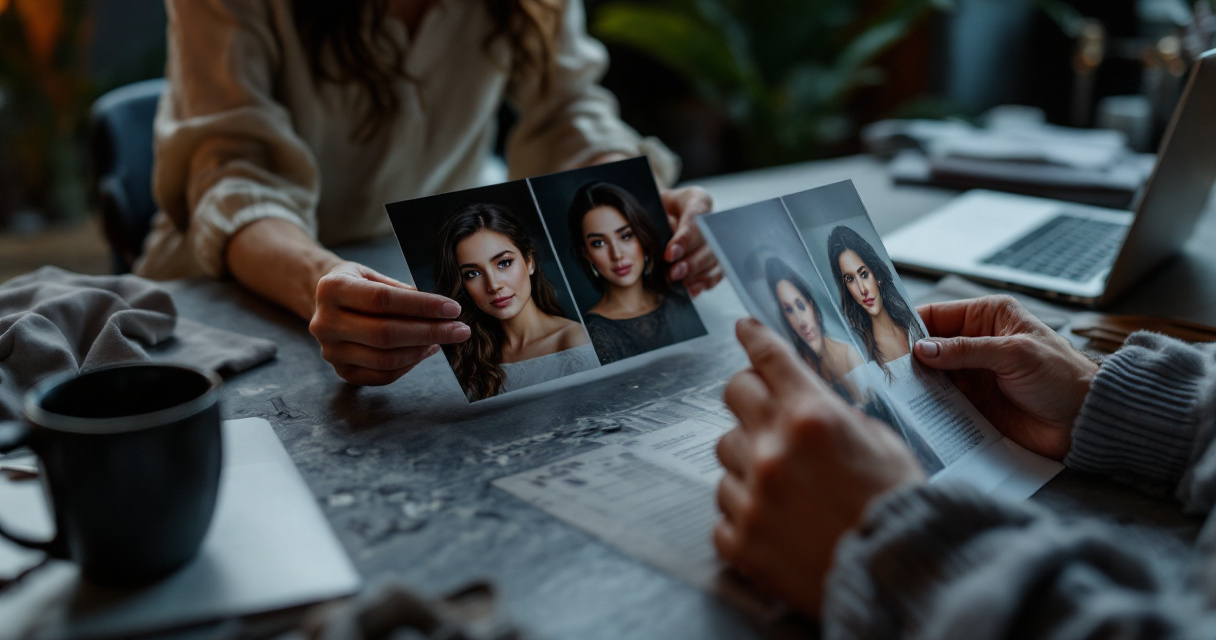
A fair concern is authenticity. Wedding planning is a relationship business, so a portrait that looks too perfect can work against you. If your photo feels synthetic, couples may notice the mismatch when they meet you on Zoom or in person.
Common problems to watch for
- Skin that looks plastic or overly airbrushed
- Teeth, earrings, or hair rendered inconsistently
- Hands or clothing details that look distorted
- Backgrounds that feel fake or overly dramatic
- A final image that resembles you only loosely
These issues are why human review still matters in 2026. AI is faster now, but speed is not the same as judgment. The strongest result is usually a lightly polished image that keeps recognizable features, not a highly stylized portrait that tries too hard.
When a traditional shoot may still be better
- You need venue-specific team photos
- You want candid behind-the-scenes brand imagery
- Your business includes a larger associate planner team
- You are being featured in a print magazine spread
That said, AI still makes sense for many planners who need an update now, especially for digital channels where consistency matters more than producing a whole lifestyle gallery.
Competitor pages in this space heavily push convenience, but they often spend less time on realistic use standards. That creates a good opening for better decision-making: use AI for fast, polished headshots; use live photography when your brand story depends on place, motion, or team interaction.
A balanced approach often wins. Keep one or two AI-generated portraits for core profiles, then schedule a live session later for event-day and behind-the-scenes imagery.
How The Looktara Lens fits into a modern wedding planner brand workflow
The Looktara Lens fits best when you want one polished portrait to support a larger personal-brand system instead of sitting alone as a profile image.
That difference matters because planners market themselves in layers. You need a headshot, yes, but you also need supporting visuals for your website, social posts, vendor outreach, and educational content. The stronger your visual consistency, the easier it is for couples and venue partners to remember you.
How The Looktara Lens handles this
| Need | Basic one-off tool | The Looktara Lens approach |
|---|---|---|
| Professional portrait | Generates a headshot | Helps you build a portrait within a wider brand workflow |
| Cross-channel use | Often stops at the image file | Connects naturally with supporting visual generators |
| Personal branding | Limited context | Better suited to planners who market themselves regularly |
| Asset expansion | Separate tools needed later | Easier to extend into posts, decks, and site visuals |
That wider workflow is useful for solo planners, boutique firms, and anyone rebuilding their online presence in 2026. If you already know your portrait will end up on a homepage banner, Pinterest content, a speaking bio, and a proposal deck, using one platform family can save real time.
Who should pick which option
- Choose a simple generator if you only need one basic profile image right away.
- Choose The Looktara Lens if you want the portrait to feed into a broader marketing system.
- Choose a live photographer if you need event coverage, team shots, or venue storytelling.
For wedding pros who publish often, that system matters more than people think. You may also want companion assets like a quote post AI generator for client-friendly social graphics or other brand visuals as your business grows.
More importantly, you do not need to overbuild on day one. Start with one believable, polished headshot, then extend it into your website and social channels. If that sounds like the right next step, visit looktara.com and map out the few places your face already represents your business.
Conclusion
A strong AI headshot for wedding planners should make you look like the person couples hope will guide a high-pressure, emotional day with taste and calm. Focus on realism, warmth, and brand fit first, then use the final portrait across your site, LinkedIn, directories, and marketing materials. If you want more than a single image file, start with The Looktara Lens and build outward into the rest of your visual brand. Your next move is simple: choose your best recent photos, define the brand style you want to project, and create one headshot you'd be proud to place on every client-facing page this week.
Generated by EarlySEO.com