
A stiff smile instantly exposes an AI headshot. Recruiters, clients, and followers can detect artificial-looking portraits in seconds, which is why modern AI portrait tools now focus on expression realism. The science behind photorealistic faces, known as human image synthesis, has advanced rapidly with multimodal AI systems that understand subtle facial cues and context. According to the 2024 research paper Gemini 1.5: Unlocking Multimodal Understanding Across Millions of Tokens of Context, modern generative models can interpret complex visual relationships across huge datasets, allowing them to recreate micro-expressions and lighting interactions with far greater accuracy. Platforms like The Looktara Lens help users generate professional portraits while preserving authentic expressions, making them useful for LinkedIn profiles, resumes, or personal branding. The techniques below show how to guide AI toward portraits that look genuinely human rather than artificially polished.
Why Natural Facial Expressions Matter in AI Headshots
Viewers judge a portrait in less than one second. Research in social perception shows that subtle facial cues, eye focus, and mouth tension strongly affect trust and approachability.
AI headshots often fail because they over-smooth skin, exaggerate smiles, or create symmetrical faces that humans rarely have. Realistic portraits include imperfections such as uneven smiles, natural wrinkles, and tiny muscle movements.
According to a 2024 IEEE survey on generative AI systems, realism improves significantly when models are trained with large multimodal datasets containing authentic facial expressions and lighting scenarios. These datasets help AI recreate believable emotions instead of generic smiles.
Natural expressions build credibility. A slightly relaxed smile with visible eye engagement consistently performs better than exaggerated or overly neutral expressions in professional portraits.
Key Traits of Natural vs Artificial AI Headshots
| Feature | Natural Expression | Artificial Expression |
|---|---|---|
| Smile | Slight asymmetry, relaxed mouth | Perfect symmetry, rigid smile |
| Eyes | Focused with subtle squint | Wide or overly sharp eyes |
| Skin | Light texture and pores | Over-smoothed plastic look |
| Lighting | Soft shadows and highlights | Flat lighting without depth |
| Emotion | Subtle, believable mood | Overly dramatic or neutral |
Professional tools such as the AI resume headshot generator help maintain these natural traits by applying controlled enhancement rather than heavy retouching.
Prompt Engineering Tricks That Produce Authentic Expressions
The words used in prompts strongly influence how AI generates facial expressions. Many beginners accidentally create unnatural portraits by requesting overly polished results.
Professional designers often use prompts that emphasize realism and subtle emotional cues.
Expression-Focused Prompt Examples
- "Relaxed professional expression with a slight natural smile"
- "Soft eye contact, neutral relaxed face"
- "Authentic candid headshot with natural skin texture"
- "Professional portrait, subtle smile, gentle eye squint"
- "Corporate headshot with realistic lighting and relaxed posture"
These prompts encourage the model to generate believable human features instead of overly stylized faces.
Expression Mistakes to Avoid
- "Perfect smile" or "flawless skin"
- "Ultra sharp cinematic portrait"
- "Symmetrical face"
- "High glam beauty lighting"
Those phrases push the model toward unrealistic results.
Creators building personal brands often combine expression prompts with branding visuals produced through tools like the AI website hero generator so the headshot matches the style of their website or portfolio.
Lighting and Camera Angles That Help AI Generate Realistic Faces
Even when AI generates the portrait, lighting physics still matters. Training datasets contain millions of photographs captured with specific lighting angles and focal lengths. Matching those patterns improves realism.
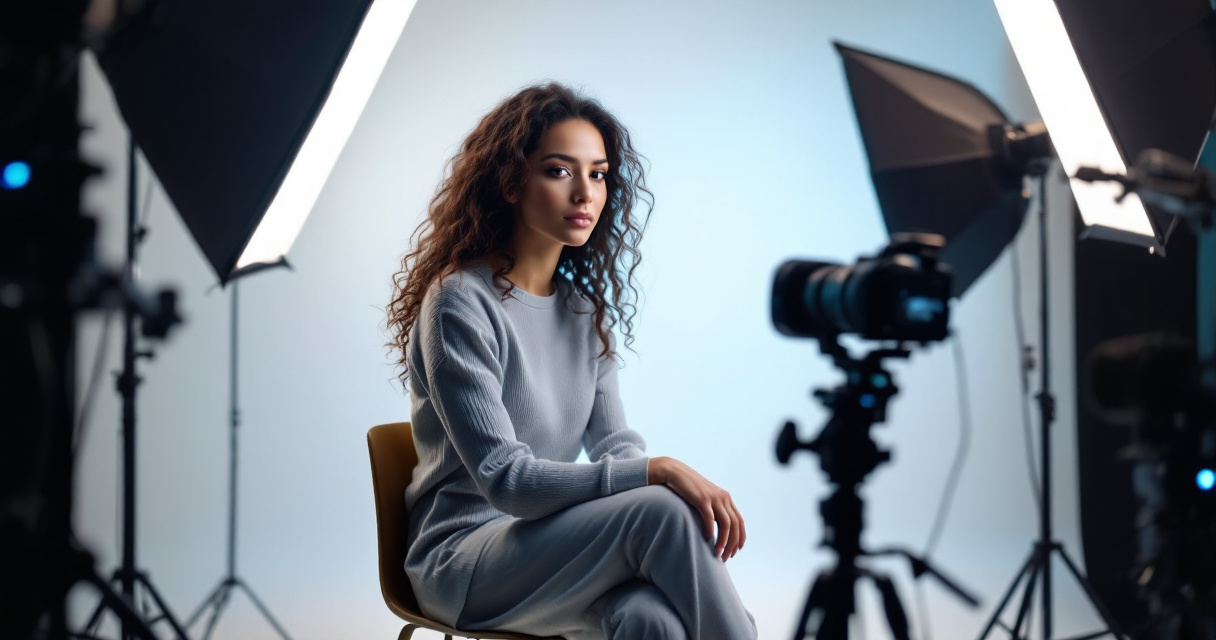
Portrait photographers often use 50mm to 85mm focal lengths because they maintain natural facial proportions. AI models mimic these visual patterns when prompts or reference images include similar framing.
Ideal AI Headshot Framing Settings
| Element | Recommended Range | Why It Works |
|---|---|---|
| Camera angle | Eye-level | Prevents distortion |
| Focal length style | 50mm–85mm portrait lens | Maintains facial proportions |
| Lighting | Window light or soft studio light | Creates gentle shadows |
| Background | Neutral blur | Keeps attention on face |
| Crop | Head and shoulders | Professional composition |
Small lighting cues, such as directional shadows near the jawline, dramatically increase realism.
Visual Study: Facial Proportion Fundamentals
Although the video focuses on drawing, the same facial proportion rules guide how AI models interpret human faces.
Micro-Expression Techniques AI Uses to Simulate Real Emotion
Micro-expressions are tiny muscle movements lasting less than half a second. Psychologists consider them reliable signals of genuine emotion.
Modern generative AI attempts to recreate these micro-details by analyzing huge facial datasets.
According to the Gemini 1.5 research paper, multimodal models can connect facial geometry with contextual cues such as body posture or lighting environment, which improves emotional realism in generated images.
Micro-Details That Improve AI Headshots
- Slight upward cheek movement
- Soft eye squint known as a "Duchenne smile"
- Subtle eyebrow relaxation
- Small asymmetry in lips
- Natural skin folds around the eyes
A genuine smile activates both the mouth and eye muscles. AI headshots that only modify the mouth often look fake.
Content creators often extend these expressions into broader branding visuals such as AI LinkedIn post graphics or AI Pinterest pin designs so the personality in the headshot carries through their content.
Training Data and Human Image Synthesis: Why Modern AI Looks More Realistic
The realism of AI portraits largely depends on training data. Human image synthesis, a field that studies how machines generate human-like visuals, has evolved since the early 2000s.
Early models relied on limited datasets and produced distorted faces. Current systems train on billions of images that capture lighting, facial structure, and emotional variation.
How Modern AI Models Improve Expression Realism
- Large-scale facial datasets with diverse demographics
- Multimodal training combining text, image, and video
- Reinforcement learning from human feedback
- Diffusion-based image generation techniques
A 2024 IEEE analysis on generative AI security and privacy highlights how training quality directly affects visual accuracy and realism.
Still, the technology has limits. AI sometimes struggles with:
- Complex hand positions near the face
- Extreme facial expressions
- Unusual lighting scenarios
Using curated image generation tools like The Looktara Lens helps minimize these issues because the system is optimized for professional portraits rather than general image creation.
Consistency Techniques for AI Portraits Across Multiple Platforms
Professionals rarely use a single headshot. LinkedIn, portfolios, speaker bios, and marketing materials often require variations of the same portrait.
Consistency becomes important when generating multiple images with AI.
Techniques for Consistent AI Headshots
- Use the same reference photo across generations
- Maintain identical lighting prompts
- Lock hairstyle and clothing descriptions
- Keep camera framing consistent
- Use the same background color or blur level
These steps prevent identity drift, a common issue where AI slightly changes facial structure between images.
Video: Maintaining Consistent AI Characters
Consistency techniques used in video character generation also apply to headshots.
Many professionals pair their headshots with visual assets like AI YouTube thumbnail creators for Shopify brands to keep branding consistent across channels.
What AI Headshot Realism Will Look Like by 2027
AI portraits improved dramatically between 2022 and 2025. The next wave focuses less on image resolution and more on emotional authenticity.
Researchers are developing systems that interpret subtle behavioral cues, voice tone, and video frames to generate more accurate facial expressions.
Expected AI Headshot Trends
- Real-time expression editing during generation
- AI models trained on video micro-expressions
- Personal identity models trained from a small photo set
- Emotion-aware prompt systems
The next generation of portrait models will understand context, not just faces. AI will recognize whether the portrait is for a job application, social profile, or brand campaign.
This shift means headshots will feel less "AI generated" and more like genuine photographs taken by a professional photographer.
Conclusion
Natural expression techniques separate convincing AI headshots from artificial-looking portraits. Subtle smiles, proper lighting, balanced prompts, and consistent facial cues all contribute to authenticity. Modern AI systems trained on large multimodal datasets now recreate micro-expressions and lighting behavior that were nearly impossible just a few years ago.
If you want a professional headshot without scheduling a studio session, tools like The Looktara Lens make the process fast and accessible. The platform helps generate realistic portraits, then lets you expand that visual identity into LinkedIn graphics, thumbnails, and brand visuals.
Start by generating a natural headshot, test a few expression prompts, and refine the lighting and framing. A few careful adjustments can turn an average AI portrait into one that feels genuinely human.