
First impressions in a pitch deck happen fast, and your profile photo quietly shapes how credible your startup feels. With more founders building remote teams and moving quickly, an AI professional profile photo has become a practical option for deck bios, press kits, LinkedIn, and investor outreach. Tools now promise studio-style results in minutes, but not every AI headshot belongs in a fundraising deck.
For teams that want a faster brand workflow, The Looktara Lens fits naturally into that process. You can pair a polished founder image with matching assets such as a pitch deck slide AI generator or a resume headshot AI generator, so your personal brand and company story look aligned from the first slide onward.
Why founder photos still influence pitch deck credibility
Investors back markets and numbers, but they also judge people. That is why competitor pages in 2025 and 2026 keep centering on founder credibility, trust, and consistency. The topic keeps ranking because startup teams know a weak photo can make a strong deck feel homemade.
A profile photo inside a startup deck usually appears on the founder slide, team slide, or advisor slide. In those places, the image is not decoration. It signals professionalism, attention to detail, and whether your company presents itself like a serious business.
A strong founder photo does one simple job: it reduces friction between your story and the reader's trust.
Research on business models also supports the idea that digital presentation matters. In Digital Business Models, Sébastien Ronteau, Laurent Muzellec, and Deepak Saxena examine how firms create and present value in digital contexts. For founders, that matters because your image is part of that value presentation, especially when investors first meet you through a PDF, not a room.
An AI-generated profile photo works best when your startup needs:
- A founder image that matches the deck's visual quality
- Consistent team photos across remote employees
- Fast updates for a raise, accelerator application, or media feature
- Lower cost than booking a full team photoshoot
A good image also carries beyond fundraising. After the deck, many investors will look you up on LinkedIn, your website, and social accounts. Keeping those visuals aligned with a LinkedIn post AI generator or a website hero AI generator helps your brand feel intentional rather than stitched together.
### Where the photo matters most inside a deck
Use your best profile image on:
- The founder introduction slide
- The leadership or team slide
- Press and speaker one-sheets attached to the deck
- Follow-up emails and investor data rooms
That consistency matters more in 2026 because investors often see your materials asynchronously on mobile, desktop, and shared workspaces.
How to make an AI headshot look investor-ready, not obviously artificial
The biggest mistake is chasing perfection. Investors do not need a magazine cover. They need a photo that looks current, human, and close to how you appear on a video call.
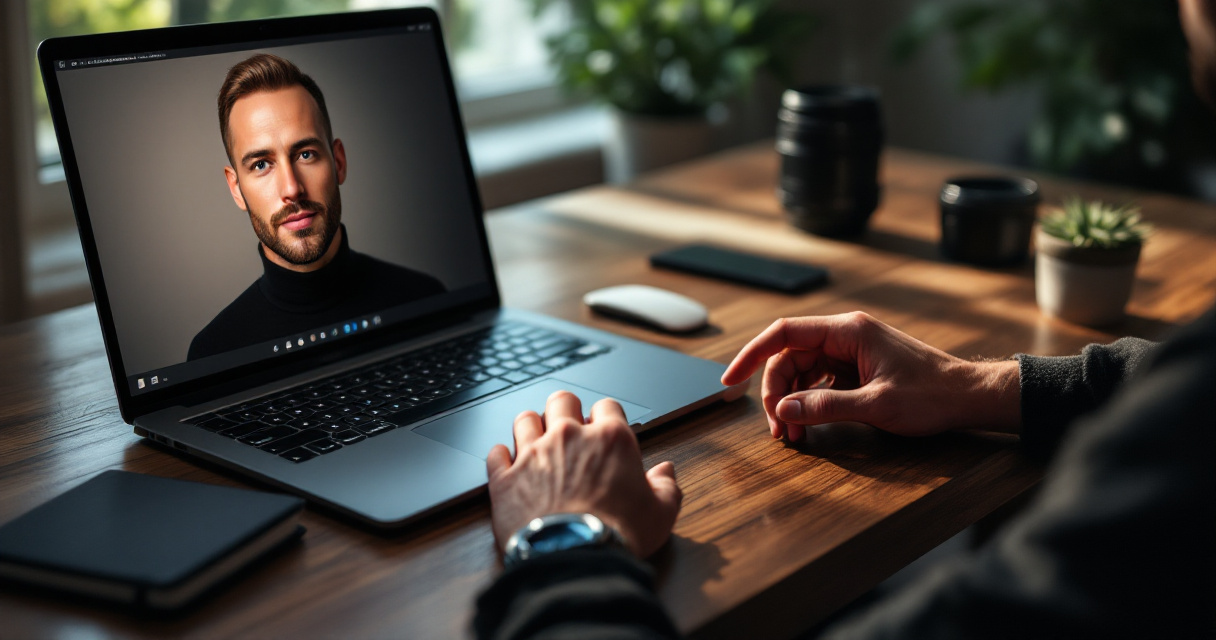
Many top-ranking pages talk about looking "credible" or "founder-ready," but they often stay generic. In practice, an investor-ready AI headshot has a narrower brief: clean composition, realistic skin texture, neutral confidence, and styling that matches your market.
### The visual checklist founders should use before exporting
Before you place an AI profile photo into your deck, review these details:
- Expression: relaxed, alert, approachable, not overly dramatic
- Wardrobe: fit your industry; B2B SaaS and fintech often call for cleaner, simpler styling than creator brands
- Background: plain or softly blurred, without fake office clutter
- Cropping: head-and-shoulders usually works best for deck bios
- Lighting: natural-looking, even light beats heavy glamor edits
- Resemblance: if a teammate would hesitate to recognize you, regenerate it
One helpful rule is to compare the image against your most recent webcam appearance. If the gap feels too wide, the photo may raise questions instead of trust.
### Quick comparison table for deck use cases
| Use case | Best photo style | Risk to avoid |
|---|---|---|
| Pre-seed founder deck | Clean, approachable, minimal retouching | Looking too staged or luxury-branded |
| Enterprise startup team slide | Consistent head-and-shoulders images | Mixed backgrounds and inconsistent wardrobe |
| Consumer brand pitch | Slightly warmer color and personality | Over-editing into influencer aesthetics |
| Accelerator application | Neutral, current, clear face visibility | Cropping too tight or using casual selfies |
When you use The Looktara Lens, the goal should be speed with restraint. A polished result helps, but realism matters more than visual drama.
What founders should upload and what they should never fake
The output quality of an AI profile photo depends heavily on the input. If you start with weak source images, AI usually amplifies the problem. That is why the smartest workflow starts before generation, not after.
Use several recent photos with different angles, plain lighting, and your actual current haircut, facial hair, and glasses. Avoid old conference photos if your appearance has changed. A startup deck is not the place to present a version of you from three years ago.
The safest AI headshot is one that edits reality lightly, not one that invents a new identity.
### Best source photos to upload for consistent results
Aim for a small batch of images that includes:
- One front-facing photo in soft daylight
- One three-quarter angle shot
- One image with your usual smile or neutral expression
- One photo with your standard work outfit
- One image against a plain wall or simple background
This gives the model enough range without confusing it.
You can also keep your brand assets connected. If you're refining a startup identity, using a logo AI generator for brand consistency alongside headshots can help your deck feel more unified.
### Red flags that make AI founder photos backfire
Do not use an AI headshot in a pitch deck if it includes:
- Distorted hands, ears, glasses, or jewelry in cropped frames
- Unreal skin smoothing or exaggerated jawlines
- Clothing you would never wear to a founder meeting
- Backgrounds implying an office, city, or event you were never in
- Group shots rebuilt into fake team images
There is also a trust issue behind this. The 23andMe data leak, reported in 2023, remains a reminder that identity-related data can be sensitive. That does not mean you should avoid AI imagery entirely, but it does mean you should be careful about what you upload, where you upload it, and how your face data is handled.
For founder marketing beyond the deck, the same caution applies to promo assets like a YouTube thumbnail AI generator or social image tools. Keep your likeness accurate across every format.
How to align one AI headshot across pitch decks, LinkedIn, media, and dating profiles
A founder photo rarely lives in one place. The same image style often ends up on LinkedIn, your startup website, speaker bios, podcast guest pages, and sometimes even dating apps. That overlap is not trivial. Your personal image now moves between professional, social, and discovery platforms faster than ever.
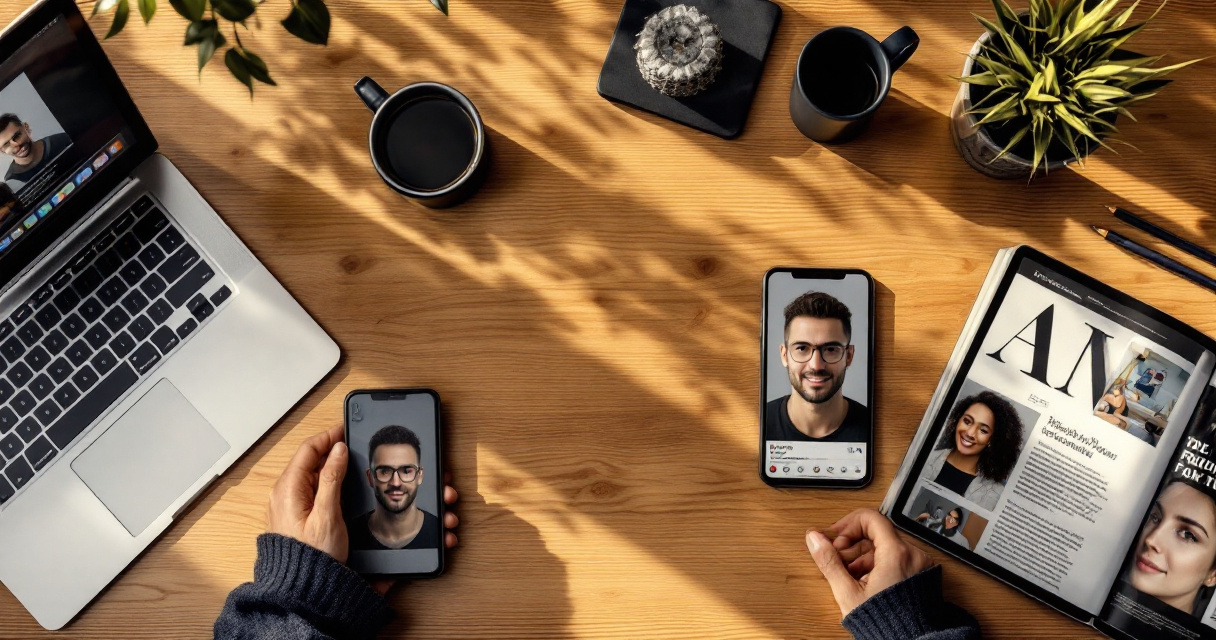
Wikipedia describes Raya as an iOS application that began as a dating app and later added professional networking and social discovery features. That crossover is a useful example of how one profile image can influence multiple kinds of first impressions. Founders should assume audiences may encounter their image in more than one context.
### A practical cross-platform image system
If you want one AI profile photo to support several channels, build around these rules:
- Use one core headshot for your pitch deck and LinkedIn
- Create one alternate crop for website bios and press mentions
- Keep colors and wardrobe close across all versions
- Update the image everywhere within the same month
- Save high-resolution and square versions separately
That system keeps your identity stable, while still allowing format changes.
For founders building content around fundraising, The Looktara Lens can sit in a broader workflow with tools such as a landing page banner AI generator or a quote post AI generator. The benefit is less about novelty and more about visual continuity.
### When different photos make sense
You do not need one identical image everywhere. Use a stricter version for investor materials and a slightly warmer, more relaxed version for creator channels or personal platforms. What matters is that both still look unmistakably like you.
A common mistake is using a hyper-corporate founder image in one place and a heavily stylized social image elsewhere. That split can weaken trust, especially for early-stage startups where the founder brand is tightly tied to the company brand.
What to expect from AI founder photos in 2027
AI headshots for pitch decks are likely to become less about novelty and more about workflow. The trend already visible across competitor pages is speed, consistency, and multi-use output. In 2027, the stronger tools will probably focus on brand systems, not just single-photo generation.
That means founders should expect:
- Better consistency across entire startup teams
- Easier resizing for decks, websites, and social platforms
- More control over background realism and wardrobe tone
- Greater scrutiny around privacy, authenticity, and disclosure
A startup raising capital in 2027 may not ask, "Should we use AI for profile photos?" The better question will be, "Can we use AI without losing authenticity?"
The answer will depend on your standards. If the photo looks like a polished version of reality, it can save time and sharpen your deck. If it looks synthetic or misleading, it will hurt more than it helps.
The future of AI headshots is not perfect faces. It is believable, brand-consistent identity at scale.
That is where the The Looktara Lens platform can be useful. Pairing founder imagery with related brand assets, from slides to social graphics, gives startups a faster way to present a coherent story while keeping the human side intact.
Conclusion
A startup pitch deck does not need a glamorous founder photo. It needs a believable one that supports trust, matches your brand, and stays consistent everywhere investors look next. If you use AI, keep the inputs current, the edits restrained, and the final image close to your real appearance.
Start by choosing 4 to 6 recent source photos, generate a small set of realistic options, and test them on your team slide before rolling them out to LinkedIn and your site. If you want to build that visual system faster, explore The Looktara Lens and connect your headshot with matching deck and brand assets. A cleaner founder image will not raise money on its own, but it can make your first impression easier to trust.
Generated by EarlySEO.com