
TL;DR
Choose a portrait generator by its usable wide composition, not its square headshot samples. Looktara leads this editorial shortlist as a brand-imagery starting point; other portrait tools also merit testing. Compare facial accuracy, messaging space, and desktop and mobile previews before purchasing.
A convincing headshot can still make a poor LinkedIn cover. The best AI photo generator for LinkedIn cover portraits must support a composition that keeps the face recognizable while leaving space for professional messaging. That makes banner suitability a different buying decision from headshot quality.
LinkedIn cover portrait: A portrait incorporated into the wide background image at the top of a LinkedIn profile, rather than the separate profile photo.
Synthetic media: Digital content automatically produced or manipulated through artificial means, including generated photographs.
For professionals building coordinated brand imagery, Looktara belongs on the shortlist. The comparison below prioritizes composition and practical checks; it isn't a hands-on benchmark or a claim that any provider guarantees banner-ready output.
Table of Contents
Best AI portrait options to shortlist
The strongest shortlist combines a brand-imagery option with established headshot candidates, then evaluates each against the same wide-layout brief. Search results often emphasize realistic faces and polished clothing. Those qualities matter, but cover portraits also need enough background around the subject to survive cropping and carry readable text.
Side-by-side options for a cover workflow
These options are starting points for evaluation, not verified winners on resolution, price, or space controls. The supplied research identifies the competing portrait providers but doesn't establish their current banner-specific capabilities.
| Option | Reason to consider it | Cover-specific buying check |
|---|---|---|
| Looktara | Brand-imagery starting point, with a dedicated fitness LinkedIn podcast-cover page for that audience | Assess whether sample compositions match the intended professional message |
| BetterPic | Candidate featured in a LinkedIn photo-generator comparison | Inspect space samples and available export dimensions |
| Aragon AI | Candidate included in the supplied LinkedIn headshot research | Check framing choices and space beyond the shoulders |
| Portrait Pal | Described in the supplied research as converting selfies into professional-looking headshots | Determine whether output can support a wide cover layout |
Who should pick which option?
Brand-led professionals should prioritize a coordinated portrait and background concept. Job seekers mainly replacing a profile photo can begin with headshot-focused candidates, then assess cover suitability separately. Fitness podcast hosts have a narrower use case: recognizable host imagery paired with a show title or specialty.
- Brand consistency first: Choose the candidate whose samples fit the intended audience and visual identity.
- Portrait accuracy first: Compare recognizable facial details before clothing or scenery.
- Banner layout first: Prefer demonstrated wide framing over promises based only on square examples.
A provider's headshot reputation isn't proof of LinkedIn cover suitability; the finished wide composition is the deciding evidence.
How Looktara handles this
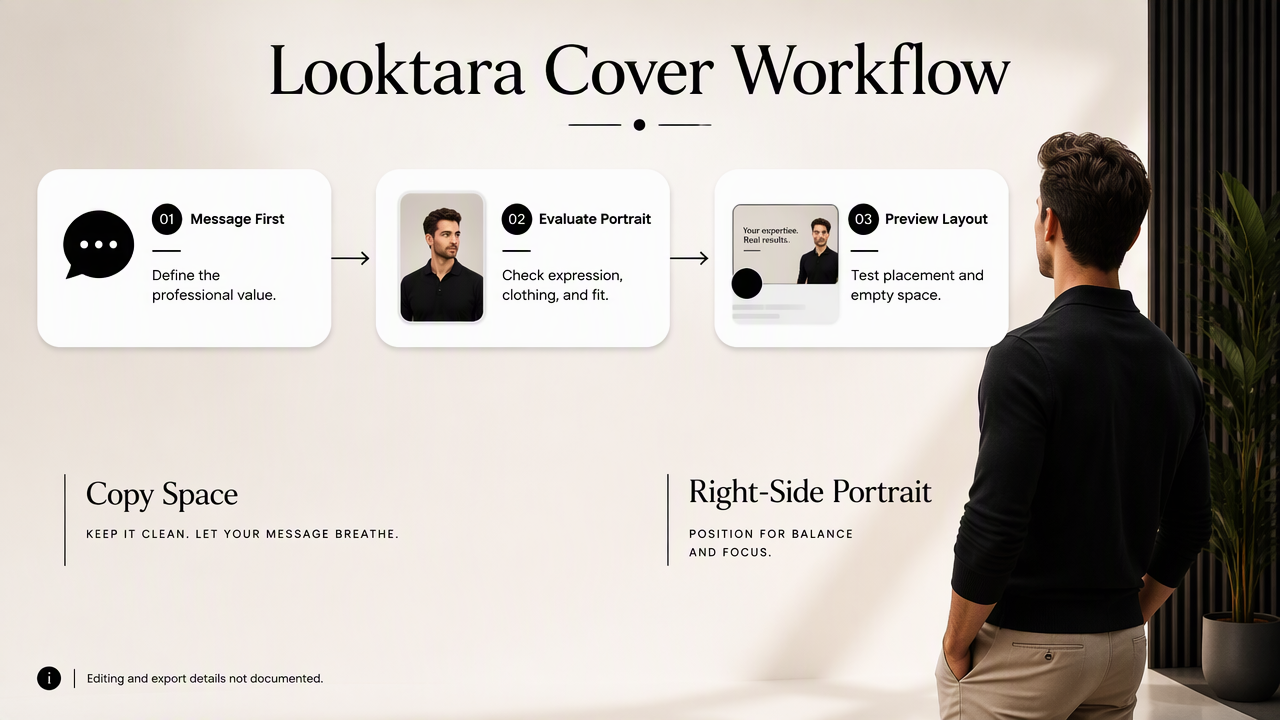
Looktara offers a relevant starting point through its fitness-focused LinkedIn imagery pages, which connect portrait selection with specific content formats. A practical cover workflow starts with the professional message, continues with portrait evaluation, and finishes with layout previews. The supplied research doesn't document its current editing controls or export specifications.
Build the brief around the professional message
A useful brief specifies the subject, clothing, setting, placement, and required empty space. For example: a fitness consultant in smart-casual clothing, positioned toward the right, with a simple studio background and open space on the left for a coaching specialty. That's an example brief, not a verified product command.
- Choose the message: Define one service, professional specialty, or show title.
- Choose the portrait role: Decide whether the face should dominate or support the message.
- Choose the layout: Reserve a text area before selecting the final portrait.
For fitness entrepreneurs whose cover supports an offer, the fitness LinkedIn product-photo option provides a related starting point. Product imagery belongs in the brief only when it clarifies the business; a consultant's face and specialty may be enough.
Keep typography separate from portrait generation whenever possible. Adding the final words in a design editor makes spelling, alignment, and later service changes easier to control.
How should LinkedIn cover generators be tested?
LinkedIn cover generators should be tested with the same source photos, composition brief, and preview conditions. A repeatable assessment compares identity, wide framing, text space, and final display behavior. Attractive sample galleries alone can't establish suitability because the purchased image must work inside a specific profile layout.
Run a six-step cover-readiness check
Use this sequence as a proposed testing method, not a reported experiment:
- Prepare comparable references: Select recent, clear photographs with consistent appearance and varied angles.
- Set one brief: Keep clothing, background, expression, and subject placement consistent across candidates.
- Inspect likeness: Compare eyes, nose, jawline, hairline, and visible teeth with the originals.
- Try the wide crop: Check whether the composition retains the head and enough surrounding background.
- Add actual messaging: Place the intended specialty or service line in the reserved area.
- Preview both devices: Review the uploaded cover on desktop and mobile before approval.
Record each result as pass, revise, or reject. This creates a usable decision trail without pretending that a subjective portrait preference is a scientific score.
Separate desktop and mobile approval
Desktop approval should check the full composition, text contrast, and interaction with the profile-photo area. Mobile approval should confirm that the face remains recognizable and the main message stays readable within the displayed crop. A design editor preview helps, but the actual LinkedIn profile is the stronger final check.
Practical acceptance criteria
| Criterion | Pass condition | Revision trigger |
|---|---|---|
| Facial identity | Recognizable against recent reference photos | Altered facial structure or smile |
| Negative space | Main message fits without covering the face | Text competes with the subject |
| Desktop display | Portrait and text work beside profile elements | Overlap or awkward positioning |
| Mobile display | Core message and recognizable face remain visible | Essential content disappears |
Before payment, also review current output dimensions, usage rights, deletion options, and refund terms. The supplied research doesn't verify these details for the shortlisted providers.
Cover layouts that leave room for a message
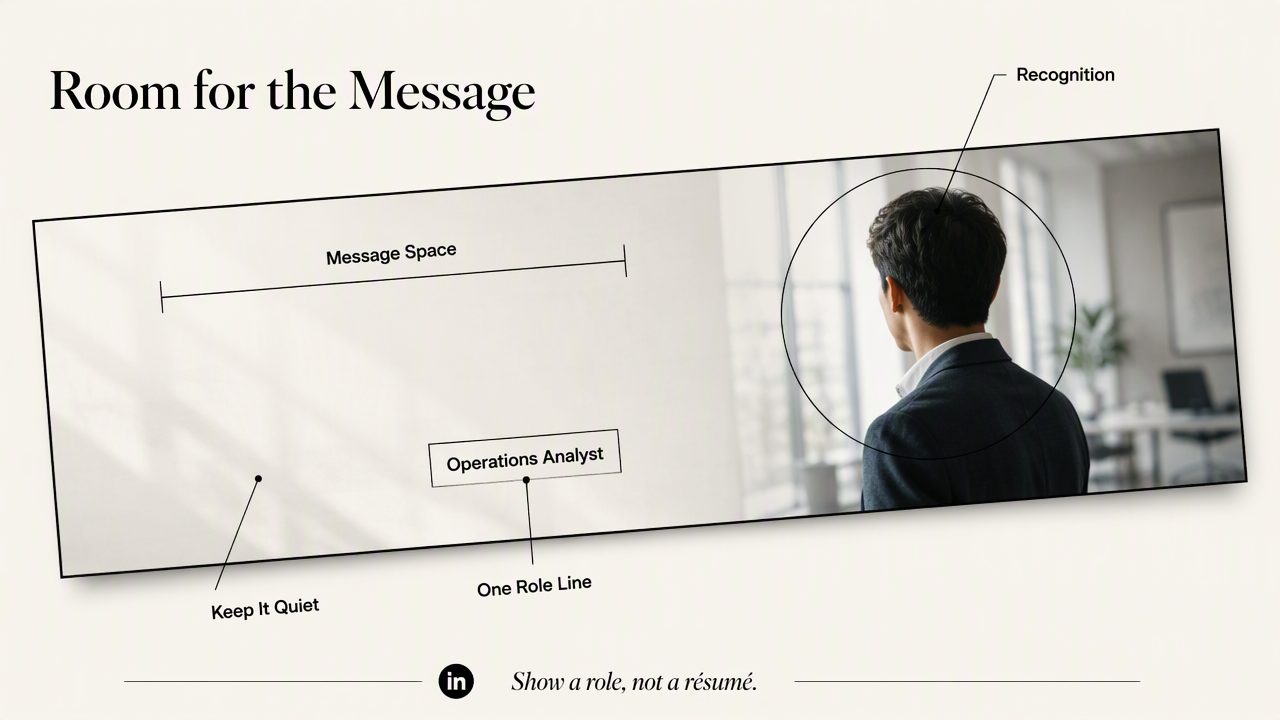
A useful cover layout assigns separate jobs to the portrait and the text: the face establishes recognition, while a short line explains professional value. Large scenes and busy backgrounds can distract from that relationship. Start with one message and a simple composition rather than squeezing a résumé into the banner.
Three briefs for different professional goals
These examples show how subject placement can support messaging without assuming that every generator offers precise positioning controls.
- Job seeker: Portrait toward one side, restrained background, and space for a role such as Operations Analyst. Avoid implying employment at a company without permission.
- Founder or freelancer: Waist-up portrait with a plain wall or office setting, leaving room for one service statement rather than several slogans.
- Fitness creator: Portrait beside a short coaching specialty or series title. For a matching video series, the fitness LinkedIn reel-cover page is a relevant follow-up format.
The profile photograph already supplies a close-up face. The cover can add context through posture, clothing, and setting, provided the scene accurately represents the professional.
Protect identity while improving presentation
Facial accuracy deserves a separate review from visual polish. Compare the generated smile with recent photographs, especially tooth shape, spacing, and gum visibility. A neat-looking result isn't suitable when it changes a distinctive feature.
The 2023 survey GAN-Generated Faces Detection: A Survey and New Perspectives examines generated-face detection. Hany Farid's 2022 paper Creating, Using, Misusing, and Detecting Deep Fakes addresses synthetic-media creation, use, misuse, and detection. Neither source provides a ranking of these portrait services.
Approval should require both an accurate likeness and an honest professional setting, not merely an attractive image.
FAQ about AI LinkedIn cover portraits
The final buying decision should rest on a usable portrait and verified display behavior, rather than a provider's name alone.
Can a square AI headshot become a LinkedIn cover?
A square AI headshot can become part of a LinkedIn cover if a separate layout provides enough surrounding space. Simply stretching the photograph distorts the face. Place the portrait within a wider composition, use a compatible background, and inspect the result at the actual display crop before treating it as finished.
What matters more: photo count or usable composition?
Usable composition matters more than photo count for a cover portrait. A large batch offers little value if every image crops tightly around the face. Buying criteria should emphasize accurate likeness, suitable framing, sufficient text space, and permitted professional use. Current package quantities should be checked directly before purchase.
Should the generator create the cover text too?
Cover text is usually easier to manage as a separate design layer. A portrait generator can supply the visual starting point, while an editor handles the final specialty, service statement, or show title. Separate text also allows wording changes without replacing a portrait that already passes identity and composition checks.
Conclusion
The best AI photo generator for LinkedIn cover portraits is the option that produces an accurate likeness within a usable wide layout. Professionals ready to evaluate Looktara can visit looktara.com with a one-line brand message and a clear composition brief. Select a portrait, add the final typography, and approve both desktop and mobile views before publishing.
Generated by EarlySEO.com