
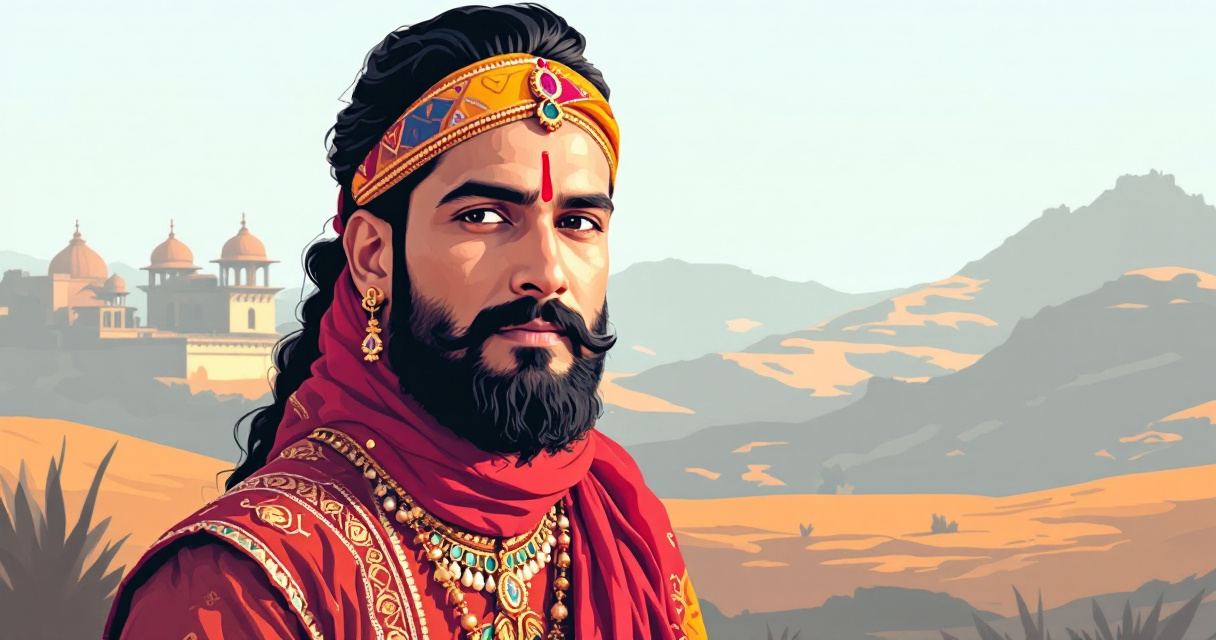
Haryanvi Traditional Dress AI Photo Prompts: Create Stunning Cultural Portraits in 2026
Over 30 million people identify with Haryanvi culture, yet finding authentic representation in AI-generated imagery remains surprisingly difficult. Most AI tools default to generic "Indian traditional dress" outputs that miss the distinctive textures, colors, and styling unique to Haryana's heritage.
This gap creates a real problem for content creators, social media users, and anyone wanting to celebrate their cultural identity through modern AI photography tools. The folk music of Haryana reflects two rich traditions, classical and desi folk, each with distinct visual aesthetics that deserve accurate representation in AI-generated content.
Whether you're creating profile pictures, social media content, or digital art celebrating Haryanvi heritage, the right prompts make all the difference. The Looktara Lens platform has helped thousands generate culturally accurate AI portraits, and this guide will show you exactly how to craft prompts that capture authentic Haryanvi traditional dress details.
Understanding Haryanvi Traditional Dress Elements
Before writing effective AI prompts, you need to understand what makes Haryanvi attire distinct from other North Indian clothing. The region's agricultural heritage and warrior traditions shaped practical yet vibrant clothing styles.
Haryanvi traditional dress combines functionality with bold aesthetic choices, featuring bright colors, heavy embroidery, and region-specific jewelry that tells stories of the wearer's village and community.
The climate of Haryana, hot summers and cold winters, influenced fabric choices and layering patterns. Cotton dominates summer wear while wool appears in winter garments. These details matter when prompting AI systems for realistic results.
Women's Traditional Attire Components
Haryanvi women's traditional clothing centers on the ghagra-choli combination, but with regional variations that set it apart:
- Ghagra (long skirt): Heavy, flared skirt with 8-12 meters of fabric, featuring mirror work and gota patti embroidery
- Choli/Kurti: Fitted or semi-fitted blouse with deep backs and three-quarter sleeves
- Odhni/Dupatta: Large headscarf in contrasting colors, often red or yellow with silver border work
- Daaman: Heavily embroidered border section of the ghagra, typically 6-8 inches wide
Color combinations follow specific cultural patterns. Red, yellow, green, and orange dominate festive wear. Married women traditionally wear specific color combinations that differ from unmarried women's choices.
Men's Traditional Attire Components
Haryanvi men's clothing reflects the region's wrestling and farming heritage with practical, durable designs:
- Kurta: Knee-length cotton shirt, typically white or cream for daily wear
- Dhoti/Tehmat: Wrapped lower garment in white cotton with colored borders
- Pagri/Safa: Turban style unique to Haryana, tied differently than Rajasthani or Punjabi versions
- Khadau: Traditional wooden footwear for special occasions
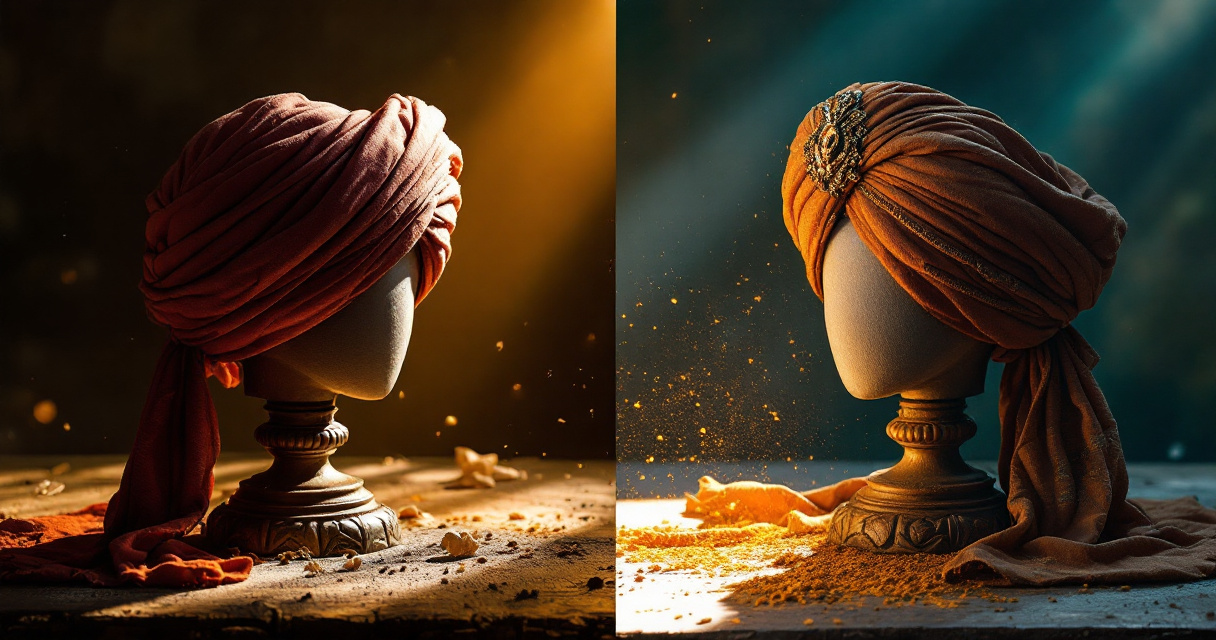
The pagri deserves special attention in AI prompts. Haryanvi turbans feature a distinctive peaked front and trailing tail (shira) that distinguishes them from neighboring states' styles.
Crafting Effective AI Photo Prompts for Haryanvi Dress
AI image generators interpret prompts literally, so specificity determines success. Generic prompts like "Indian traditional dress" produce inconsistent results. You need layered descriptions that guide the AI toward authentically Haryanvi outputs.
The key is building prompts with three layers: subject description, clothing details, and contextual elements. Each layer adds accuracy to your final image.
Prompt Structure Framework
Use this framework when building your Haryanvi traditional dress prompts:
| Prompt Layer | What to Include | Example Terms |
|---|---|---|
| Subject | Age, gender, pose, expression | Young woman, proud stance, gentle smile |
| Primary Clothing | Main garment with specific details | Heavy red ghagra with mirror work, fitted green choli |
| Accessories | Jewelry, footwear, headwear | Silver borla tikka, glass bangles, embroidered jutis |
| Fabric/Texture | Material and embroidery style | Cotton fabric, gota patti embroidery, zari borders |
| Context | Setting, lighting, occasion | Village courtyard, warm sunset light, wedding celebration |
This structured approach helps AI systems generate more accurate results than single-sentence prompts.
Ready-to-Use Prompts for Women's Attire
Copy and customize these tested prompts for women's Haryanvi traditional dress:
Festive/Wedding Look: "Portrait of a young Haryanvi woman wearing heavy red ghagra with mirror work embroidery, green fitted choli with gota patti borders, bright yellow odhni draped over head, silver borla maang tikka on forehead, multiple glass bangles on both wrists, traditional silver nose ring, warm natural lighting, proud confident expression, rural Haryana village background"
Daily Traditional Look: "Haryanvi village woman in simple cotton ghagra with printed pattern, modest choli in complementary color, cotton dupatta covering head, minimal silver jewelry, standing in agricultural field, morning light, natural relaxed pose"
Dance/Performance Look: "Haryanvi folk dancer in bright orange and pink ghagra with heavy daaman embroidery, backless choli, flowing odhni, silver payal ankle bells, dynamic spinning pose, traditional Haryanvi dance formation, festive lighting"
If you're also creating content for fitness or lifestyle brands, tools like AI-powered YouTube thumbnail generators can help maintain visual consistency across your content.
Advanced Prompt Techniques for Authentic Results
Basic prompts get basic results. These advanced techniques push AI generators toward more culturally accurate outputs that capture subtle regional differences.
Specifying Regional Jewelry Details
Haryanvi jewelry has distinct characteristics that differ from Rajasthani or Punjabi designs. Include these specific terms:
- Borla: Forehead ornament with central pendant, different from Rajasthani borla in size and design
- Hansli: Heavy silver neck ring, often featuring snake-head terminals
- Kade: Thick silver bangles worn on upper arms
- Payal: Ankle bells with specific Haryanvi chain patterns
- Nath: Nose ring style with pearl or bead drops
Pro tip: Adding "traditional Haryanvi silver jewelry, not gold" to your prompts helps AI distinguish from other North Indian styles where gold dominates.
The distinction matters because AI models trained on general Indian imagery often default to gold jewelry, which isn't accurate for traditional Haryanvi representation.
Color Combination Specifics
Haryanvi color preferences follow cultural significance:
- Wedding/Auspicious: Red base with green accents, yellow odhni
- Teej Festival: Green ghagra, red or pink choli, yellow dupatta
- Daily Wear: Earthy tones, indigo, maroon with cream
- Widows/Elderly: White or subdued colors with minimal embroidery
Specify exact color combinations in prompts rather than saying "colorful" or "traditional colors." This precision dramatically improves output accuracy.
For creators building social media presence around cultural content, consider how AI quote post generators can complement your visual content strategy with matching aesthetics.
Common Mistakes and How to Avoid Them
Even detailed prompts fail when they include conflicting or inaccurate cultural elements. Here's what trips up most users.
Cultural Accuracy Pitfalls
Avoid these frequent errors in Haryanvi dress prompts:
| Mistake | Why It's Wrong | Correct Approach |
|---|---|---|
| Using "lehenga" instead of "ghagra" | Different garment structure | Specify "Haryanvi ghagra" with fabric amount |
| Rajasthani jewelry descriptions | Different regional styles | Use Haryanvi-specific jewelry terms |
| Generic "Indian village" backgrounds | Misses regional architecture | Describe mud houses, neem trees, wheat fields |
| Gold jewelry default | Haryanvi tradition favors silver | Explicitly state "traditional silver jewelry" |
| Modern fabric textures | Breaks authenticity | Specify cotton, wool, or handloom textures |
These distinctions separate generic outputs from genuinely Haryanvi representations.
Technical Prompt Adjustments
AI systems respond better to certain formatting choices:
- Place most important elements first in your prompt
- Use commas to separate distinct elements
- Avoid contradictory descriptors ("modern traditional" confuses AI)
- Include lighting and mood for consistent results
- Add negative prompts when possible: "no modern clothing, no synthetic fabrics"
The Looktara Lens platform simplify this process by offering pre-built cultural templates that handle technical optimization automatically.
Using AI Haryanvi Portraits Across Platforms
Your AI-generated Haryanvi portraits work across multiple use cases when sized and styled correctly.
Social Media and Professional Profiles
Different platforms need different approaches:
- LinkedIn: Subtle traditional elements work best; consider modern fusion interpretations
- Instagram: Full traditional looks perform well; emphasize color and detail
- Dating Apps: Authentic cultural representation attracts compatible matches
- WhatsApp/Family Groups: Traditional occasion-specific portraits for festivals
For professional headshots with cultural elements, AI resume headshot generators can help you balance tradition with professional presentation.
Content creators building consistent brand imagery across platforms should explore TikTok cover generators that maintain visual cohesion.
Video Thumbnail of AI Photo Editing Trends
See how creators are using AI for cultural photo editing in this popular tutorial:
This video demonstrates current techniques that apply directly to Haryanvi traditional dress generation.
What's Next for Cultural AI Photography in 2027
The intersection of AI and cultural representation is evolving rapidly. Regional specificity in AI training data is improving, meaning future tools will better understand distinctions between Haryanvi, Punjabi, and Rajasthani aesthetics without extensive prompting.
Expect dedicated cultural portrait modes in major AI platforms by late 2026. Early adopters who master prompt engineering now will have significant advantages when these tools mainstream.
Emerging Capabilities to Watch
Several developments will impact Haryanvi AI portrait creation:
- Regional dialect voice-to-image: Describe prompts in Haryanvi dialect for better results
- Historical accuracy modes: Generate period-specific traditional dress
- Family portrait generation: Multiple subjects in coordinated traditional attire
- Video avatar integration: Animated portraits in traditional dress for digital content
Platforms like The Looktara Lens are already developing features that anticipate these capabilities, making cultural portrait generation more accessible to everyone.
Conclusion
Creating authentic Haryanvi traditional dress AI photos requires understanding both the cultural elements and technical prompt engineering. Start with the framework provided, focus on specific details like ghagra fabric amounts, silver jewelry types, and regional color combinations, then refine based on results.
Your next step: pick one prompt from this guide and generate your first Haryanvi portrait today. Pay attention to what the AI gets right and wrong, then adjust your prompt using the troubleshooting table. Each iteration teaches you more about how AI interprets cultural dress descriptions.
For creators serious about cultural content, The Looktara Lens offers specialized templates for regional Indian attire that eliminate the guesswork from prompt engineering. The platform's cultural accuracy features help you skip the trial-and-error phase and generate authentic portraits immediately.
Start simple, add detail gradually, and you'll develop an intuition for prompts that capture genuine Haryanvi heritage in every generated image.