
A residency application can be judged in seconds, and your headshot often appears before your CV. Program directors review hundreds of profiles each cycle, so a poorly prepared photo can unintentionally signal a lack of professionalism. Medical organizations such as the AAMC and ERAS maintain clear standards for application photos, including image dimensions, attire, and file size. For healthcare professionals also building online credibility through LinkedIn or clinic websites, the expectations are even broader. Modern tools like The Looktara Lens now help applicants create polished professional images quickly, but understanding the official requirements still matters. This guide explains the current medical professional headshot standards in 2026, from ERAS technical specs to wardrobe, lighting, and mistakes that can quietly harm your application.
Why Medical Headshots Matter More Than Many Applicants Realize
Residency program directors often evaluate hundreds of applications in a short period. While a photo is not a scoring metric, it contributes to first impressions and professionalism. According to residency advising surveys summarized by medical schools, applicants with clear, professional photos are perceived as more prepared and credible during early application review.
Medical headshots serve several purposes beyond residency applications:
- Residency and fellowship applications (ERAS, EFDO)
- Medical school applications (AMCAS)
- Hospital or clinic staff directories
- Research publications and conference bios
- Professional networking platforms such as LinkedIn
A polished image signals attention to detail. In healthcare, where trust and credibility matter, small presentation cues influence perception.
"Professional identity formation in medicine often includes visual cues such as attire, posture, and presentation," note researchers studying professional identity in healthcare (Miceli & Posada, 2022).
Applicants also increasingly maintain digital profiles. Many physicians now combine professional headshots with online brand assets such as banners or social posts created with tools like a LinkedIn post image generator to maintain consistent visual branding across platforms.
Where Medical Headshots Are Used Today
Beyond ERAS and AMCAS, doctors now use the same headshot across multiple professional platforms. Healthcare organizations increasingly publish physician directories and profile pages.
Common placements include:
- Hospital staff pages
- Telemedicine platforms
- Medical conference speaker profiles
- Research author bios
- Professional networking platforms
Consistency matters. Many professionals pair their headshot with visual content such as website banners created using tools like a website hero image generator for professional branding.
Official ERAS and AMCAS Headshot Technical Requirements
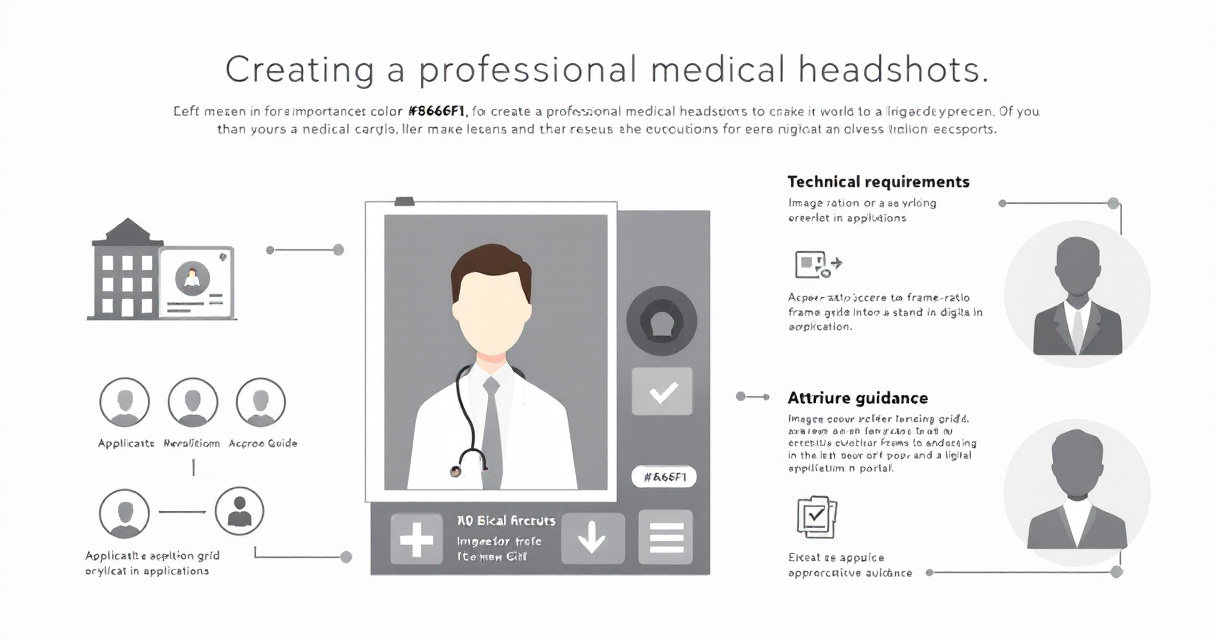
Residency and medical school application systems provide precise photo guidelines. Submitting an image outside these specifications can cause upload failures or image distortion.

Standard Photo Specifications for Medical Applications
| Requirement | ERAS Standard | AMCAS Typical Guidance |
|---|---|---|
| Dimensions | 2.5 x 3.5 inches | Passport-style portrait |
| Resolution | 150 DPI | High-quality digital image |
| File format | JPG / JPEG | JPG / PNG accepted |
| File size | Max 150 KB | Usually under 1 MB |
| Composition | Head and shoulders centered | Neutral professional portrait |
Many residency photography studios now design images specifically to meet these exact specs.
Applicants should also ensure the photo was taken recently. Most programs recommend an image taken within the last 6 months so the appearance accurately represents the applicant during interviews.
Several residency application guides emphasize that outdated photos can create confusion during interviews if the applicant looks significantly different.
Cropping and Framing Expectations
Residency photos should show the head and upper shoulders with balanced framing. Avoid tight cropping that cuts into the top of the head or chin.
Key composition rules:
- Eyes positioned around the top third of the frame
- Neutral or slight smile
- Camera at eye level
- Minimal empty space above the head
Professional photographers typically follow portrait framing standards similar to passport photos but with softer lighting and better depth.
What to Wear in a Medical Headshot (Attire That Signals Professionalism)
Clothing communicates professionalism instantly. Residency program advisors consistently recommend simple, conservative attire that mirrors what physicians wear in clinical environments.
Recommended Attire for Medical Headshots
- Dark blazer or suit jacket
- Light-colored shirt or blouse
- Minimal jewelry
- Clean grooming and natural makeup
- Hair styled neatly away from the face
Avoid bold patterns, distracting accessories, or casual clothing.
Clothing Choices That Work Best
| Category | Recommended | Avoid |
|---|---|---|
| Colors | Navy, charcoal, black | Neon or bright red |
| Patterns | Solid colors | Busy prints or stripes |
| Accessories | Small earrings, subtle watch | Large jewelry or logos |
| Tops | Button-up shirts or blouses | T-shirts or hoodies |
White coats are sometimes used in physician headshots for hospital directories. However, for residency applications many advisors suggest a suit instead because it appears more neutral.
Gender-Neutral Styling Tips for Professional Photos
Modern headshot advice emphasizes professionalism rather than gender-specific styling.
Universal best practices include:
- Matte makeup or light powder to reduce shine
- Neutral hairstyles that keep the face visible
- Natural posture with relaxed shoulders
- Subtle smile to appear approachable
Small presentation choices matter. Studies on professional perception consistently show that facial clarity and eye contact strongly influence credibility judgments.
Lighting, Background, and Camera Setup Standards
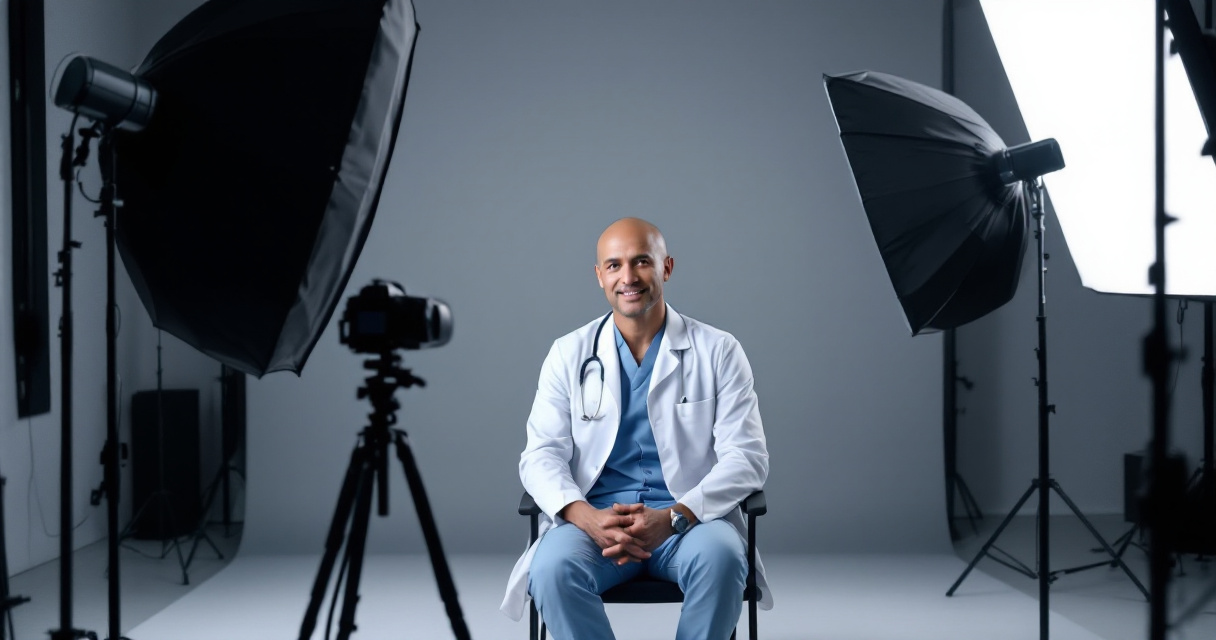
Lighting and background quality strongly affect whether a headshot appears polished or amateur. Medical programs expect a clean, neutral portrait style similar to professional corporate photos.
Background Styles That Work Best
| Background Type | Why It Works |
|---|---|
| Neutral gray | Professional and consistent across profiles |
| Soft white | Bright and clean appearance |
| Blurred office setting | Adds subtle context without distraction |
Avoid busy environments such as hospital corridors, labs, or outdoor scenes with harsh lighting.
Lighting Rules Used by Professional Studios
- Soft front lighting to reduce facial shadows
- Even lighting across both sides of the face
- Minimal glare on glasses
- Balanced skin tone with no color cast
A simple two-light setup often produces the best results.
Video Guide: Building a Strong Professional Profile
Many applicants use the same photo for both residency profiles and professional networking pages.
When AI Tools Can Help Improve Photo Quality
Modern AI tools now help professionals improve lighting, framing, and background consistency. According to a 2024 review of generative AI applications by Gozalo-Brizuela and Garrido-Merchan, AI imaging tools increasingly support automated portrait enhancement.
Platforms such as The Looktara Lens allow users to refine headshots for resumes or professional profiles without complex editing software. For example, a dedicated AI resume headshot generator can help adjust lighting, crop portraits, and produce application-ready images quickly.
Common Medical Headshot Mistakes That Hurt Applications
Residency advisors repeatedly mention that many applicants submit photos that look rushed or casual. While the photo does not determine admission decisions, it contributes to the overall presentation.
Frequent Problems in Residency Application Photos
- Selfies taken with phone cameras
- Harsh shadows or uneven lighting
- Distracting backgrounds
- Cropping that cuts off shoulders
- Over-edited filters
Over-editing is especially common with mobile apps. Programs prefer natural-looking portraits rather than heavily smoothed or stylized images.
Residency advisors often recommend treating the headshot like a job interview outfit: clean, neutral, and professional.
Applicants building a broader online presence sometimes also create supporting visuals such as conference slides or research presentations using tools like a pitch deck slide design generator to maintain a consistent professional identity.
DIY vs Professional Studio Photography
Professional studio sessions usually produce the best results because photographers control lighting and framing precisely.
Still, many applicants now take high-quality photos using modern smartphone cameras.
DIY setup checklist:
- Use natural window light
- Place camera at eye level
- Use a tripod or stable surface
- Choose a neutral wall background
- Avoid overhead lighting
If done carefully, a DIY headshot can meet application requirements.
How Medical Professionals Use Headshots Beyond Applications
After residency applications, the same headshot often appears across many professional platforms. Doctors now maintain public profiles more frequently than a decade ago.
Common uses include:
- Telehealth provider profiles
- Medical practice websites
- Conference speaker bios
- Research publications
- Media interviews
Digital branding matters more in modern healthcare communication. A consistent visual identity improves recognition across platforms.
Many healthcare entrepreneurs and educators also share insights online. Tools such as a YouTube thumbnail generator for medical content creators help maintain visual consistency across videos, presentations, and educational materials.
Future Trends: AI Portrait Tools and Digital Medical Branding
Professional headshots are evolving alongside digital identity tools. AI imaging software now assists with:
- Portrait retouching
- Lighting correction
- Background replacement
- Multi-platform image resizing
Research from the Journal of Computer Science (2024) shows rapid adoption of generative AI for media production tasks, including professional image editing.
Tools like The Looktara Lens platform represent this shift, helping professionals quickly produce high-quality images suited for resumes, profiles, and branding.
Conclusion
Medical headshots may seem like a small detail, but they shape the first impression of your professional identity. Residency programs expect clear photos that follow ERAS and AMCAS specifications, with neutral backgrounds, professional attire, and recent images. Avoid selfies, excessive filters, or busy environments, and ensure your photo meets the correct dimensions before uploading.
If you are preparing a residency application, updating your LinkedIn profile, or building a professional medical brand, take time to create a polished portrait. Tools like The Looktara Lens can help refine your headshot, adjust lighting, and produce application-ready images quickly.
Review your current profile photo today. If it does not meet the standards outlined above, replace it with a professional headshot that reflects the credibility and trust expected in modern healthcare.