
A great minimalist AI headshot does less, not more. The best results in 2026 usually come from simple clothing, plain backgrounds, realistic lighting, and edits that still look human, which matches what recent ranking guides keep recommending for AI headshots and attire, especially around solid colors, natural texture, and accuracy to your real appearance. If you want a photo for LinkedIn, your resume, a founder bio, or a dating profile, the goal is clarity, not visual noise. Tools like The Looktara Lens can help you build that clean look faster, especially if you want one image style that can extend into a resume headshot workflow and the rest of your personal brand.
Why minimalist AI headshots work better for modern profiles
Minimalism fits headshots because the image has one job: show your face clearly and credibly. Competitor analysis from current SERP leaders shows repeated advice around solid-color clothing, polished but simple styling, and natural-looking output instead of dramatic effects. That pattern matters because flashy AI portraits may win attention for a second, but they often lose trust.
Another reason the style works is flexibility. A clean headshot can move across LinkedIn, speaker pages, company bios, pitch decks, and social profiles without feeling off-brand. That matters if you're also creating matching assets like a personal brand LinkedIn post visual or a pitch deck slide design.
Key takeaway: Minimalist headshots perform best when they reduce distractions without removing personality.
What "minimalist" actually means in a headshot
Minimalist does not mean cold, blank, or severe. In practice, it usually means:
- A neutral or softly blurred background
- One main light direction, real or simulated
- Limited retouching
- Solid, well-fitted clothing
- Natural skin texture
- Little or no visible props
That lines up with competitor guidance that says your AI headshot should still look like you, with realistic lighting and true-to-life detail.
Where people get it wrong
Many users confuse minimalism with over-smoothing. They remove lines, pores, flyaways, and shadows until the image feels synthetic. Others go too far with fashion styling, adding loud patterns or trendy backgrounds that date the image quickly.
A minimalist result should feel current in 2026, but not tied to one short-lived visual trend. If your photo would look strange on a company about page, it probably isn't minimalist enough.
Build the look from the outside in: clothing, grooming, and background
Your styling choices matter more than most prompt wording. One of the top-ranking articles in 2026 on AI headshot attire strongly emphasizes solid colors and good fit over patterns, logos, or trendy layers. That's smart advice because AI tends to render simple garments more consistently.
The simplest wardrobe choices usually win
Pick one outfit that matches your real professional identity, not a fantasy version of it. For most users, that means a blazer, crew neck, button-down, blouse, knit top, or clean dress in a muted shade.
- Best colors: navy, charcoal, black, cream, white, soft blue, olive
- Riskier choices: neon, tiny patterns, heavy jewelry, visible brand marks
- Best fit: structured but comfortable, not oversized or skin-tight
Use grooming that reads "intentional" on camera
Minimalist styling still needs polish. Aim for tidy hair, clean brows, even skin tone, and natural lip color or beard lines. You don't need editorial makeup or a salon finish. You do need consistency across your photo set so AI doesn't invent different versions of your face.
Backgrounds that keep attention on your face
Plain light gray, warm beige, off-white, and softly blurred office-like backgrounds are usually safest. Very bright white can wash out skin, while dark black can feel too dramatic for a minimalist look unless you're in a creative field.
Quick comparison table for style decisions
| Element | Best minimalist choice | Usually avoid |
|---|---|---|
| Clothing | Solid colors, tailored basics | Busy prints, logos |
| Accessories | Small studs, thin necklace, simple watch | Chunky statement pieces |
| Hair | Natural shape, tidy finish | Extreme volume changes |
| Background | Neutral wall, soft blur | Detailed rooms, bold sets |
| Retouching | Light cleanup, real texture | Plastic skin, altered features |
If you want one visual system across channels, the same stripped-back style can also support a website hero image workflow or a simple logo direction so your personal branding feels consistent.
Prompting for minimalism without getting a bland or fake result
Prompt quality still matters, but it works best after you've chosen the right source photos and styling. Competitor content around AI headshot creation often focuses on style prompts, yet the most useful move is adding constraints: natural texture, accurate likeness, clean composition, and restrained editing.
Prompt ingredients that keep the image realistic
Use prompts that describe the photo you want, then clearly state what to avoid. Short prompts often work better than overloaded ones.
- Start with identity and use case: professional LinkedIn headshot, founder bio portrait, clean personal branding photo
- Define the visual style: minimalist, natural light, neutral background, realistic skin texture
- Add wardrobe direction: solid-color blazer, simple blouse, clean crew neck
- Add framing: chest-up or shoulders-up, eye contact, centered composition
- Add limits: no heavy retouching, no glam makeup, no exaggerated sharpness, no fantasy background
Sample minimalist prompt framework
- Subject: accurate likeness, adult professional, friendly expression
- Style: minimalist headshot, modern, clean, believable
- Lighting: soft directional light, natural shadow, no harsh contrast
- Background: plain neutral backdrop with subtle depth
- Finish: realistic skin texture, detailed eyes, natural hair, no over-editing
Prompt rule: If your prompt includes too many aesthetic buzzwords, your result often looks less human.
Best source photo inputs for AI headshots
The strongest source images tend to share three traits:
- Clear facial visibility
- Similar grooming across photos
- Mixed angles with consistent identity markers
Avoid feeding the model old photos from very different seasons of your life. If your hair, weight, glasses, or facial hair changed a lot, the AI may blend versions and create a face that feels slightly off.
Using The Looktara Lens for a minimalist headshot works best when you upload recent photos with plain lighting and minimal visual clutter. That gives the system a cleaner base to preserve your real features instead of inventing extras.
Minimalist headshot rules by platform and goal
A clean style isn't identical everywhere. LinkedIn, startup bios, dating apps, and creator profiles each reward different levels of warmth, contrast, and polish. The trick is keeping one core identity while adjusting the final crop and tone.
LinkedIn and resume profiles need credibility first
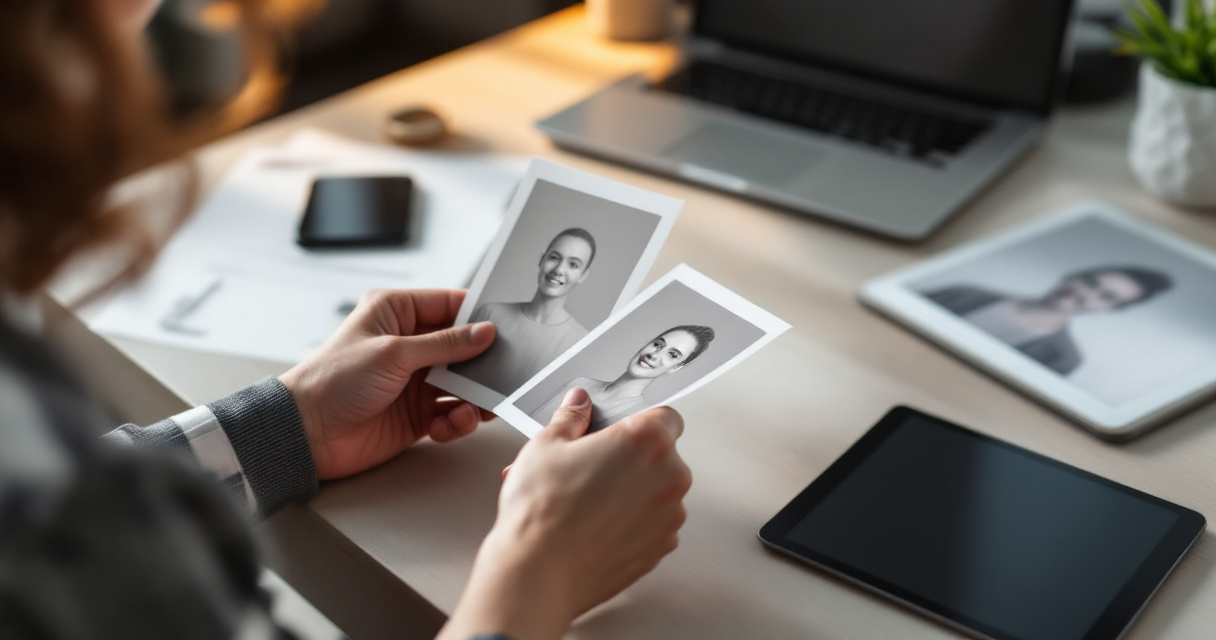
For career use, go slightly more formal than casual. A direct gaze, soft smile, and neutral backdrop make the image easier to trust at thumbnail size. If job searching is your focus, pair the photo with a matching resume headshot generator setup so your application materials feel unified.
Founder, freelancer, and consultant profiles need a personal edge
Entrepreneurs can keep the minimalist base while relaxing one element, maybe a warmer background, an open collar, or slightly more personality in expression. The image should still look clean enough to sit beside a pitch deck slide asset or speaker bio.
Dating and creator platforms need warmth, not stiffness
For social or dating use, the biggest mistake is making the image too corporate. A minimalist style can still feel inviting if you keep natural texture, use softer light, and choose a more relaxed outfit. The goal is polished authenticity.
Platform-by-platform adjustment list
- LinkedIn: neutral background, medium contrast, business-casual wardrobe
- Resume/CV: same as LinkedIn, slightly tighter crop
- Founder bio: minimalist, but a touch more warmth and personality
- Instagram creator page: cleaner than lifestyle content, less formal than LinkedIn
- Dating apps: natural smile, softer styling, avoid stiff posing
For broader content consistency, the same portrait style can branch into branded assets like a YouTube thumbnail creator or a Pinterest pin design tool without forcing a totally new visual identity.
What will define minimalist AI headshots in 2027
The next shift is likely not more glam, but more believable restraint. Current 2025 and 2026 competitor advice already favors natural skin texture, realistic lighting, and true-to-life resemblance. That suggests the market is getting less impressed by obviously AI-generated perfection.
Expect "authentic realism" to matter more
Users are getting better at spotting artificial cues: too-symmetrical eyes, over-whitened teeth, flattened skin, and impossible fabric details. In 2027, the strongest minimalist headshots will probably be the ones that preserve tiny asymmetries and natural texture while still cleaning up distractions.
Brand systems will matter more than a single image
A headshot now often sits inside a wider visual package. Job seekers need a profile photo, resume image, and social banner. Founders need a headshot, deck visuals, and profile graphics. That's where the The Looktara Lens platform becomes more useful than a one-off generator, because you can keep the same restrained look across multiple assets instead of rebuilding your style each time.
Your minimalist headshot checklist before you publish
- Does the image still look unmistakably like you?
- Is the outfit simple and believable for your field?
- Is the background clean without feeling sterile?
- Did you keep skin texture and natural shadows?
- Does the photo fit the platform where you'll use it first?
Smart rule for 2026 and beyond: If the headshot looks perfect but not plausible, redo it.
A minimalist style lasts because it isn't trying too hard. That's exactly why it works.
Conclusion
Minimalist AI headshots win by editing less, styling smarter, and protecting what makes your face recognizable. Start with recent source photos, choose solid-color clothing, keep the background neutral, and prompt for realism instead of drama. Then test one version for LinkedIn, one for broader personal branding, and one warmer variation if you need a social or dating profile.
If you want to build that look fast, start with The Looktara Lens and create a clean portrait set you can reuse across your online presence. From there, extend the same style into supporting assets like a LinkedIn post graphic or a website hero visual. Your next step is simple: pick 8 to 12 recent photos, define one minimalist wardrobe direction, and generate a first batch that looks polished, current, and most importantly, like you.
Generated by EarlySEO.com