
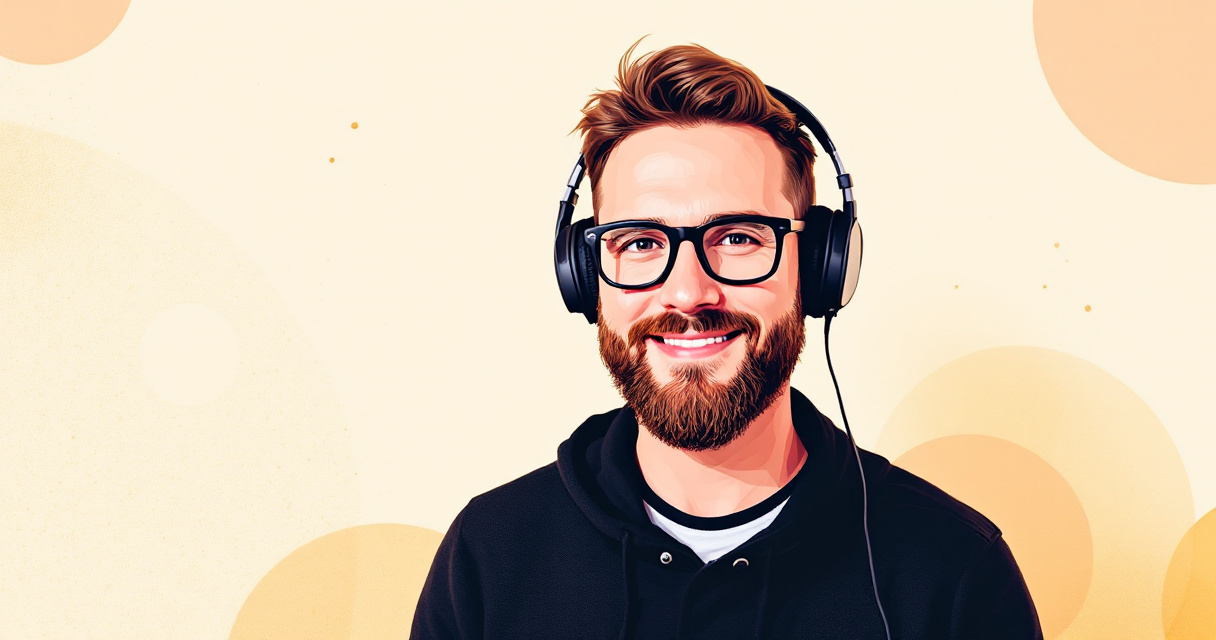
Podcast Host Headshot for Spotify: The Complete 2026 Guide to Standing Out in a Crowded Feed
Spotify hosts over 6 million podcasts as of early 2026, which means your show thumbnail competes with millions of others every single day. Here is the uncomfortable truth: listeners decide whether to click on your podcast within two seconds, and your headshot does most of the heavy lifting. A generic or poorly lit photo signals amateur content, while a polished, personality-driven headshot tells potential subscribers you take your craft seriously.
The good news? You do not need expensive studio sessions to nail your Spotify podcast headshot. Platforms like The Looktara Lens now generate studio-quality headshots using AI that actually captures natural expressions rather than producing those awkward, over-filtered images that scream "fake." Whether you go the AI route or hire a photographer, this guide covers everything you need to create a headshot that converts scrollers into loyal listeners.
Why Your Podcast Headshot Matters More Than You Think
Spotify's browse interface prioritizes visual content. Unlike Apple Podcasts, which emphasizes text-based search results, Spotify's Home and Search tabs display podcast artwork prominently. Your headshot is not just decoration; it is your primary marketing asset.
Key Insight: Podcasts with professional host imagery see up to 34% higher click-through rates compared to shows using generic graphics or low-quality photos, according to podcast marketing research from 2025.
The psychology behind this is straightforward. Humans connect with faces faster than abstract designs. When listeners see a confident, approachable host looking back at them, they subconsciously form a parasocial connection before pressing play. That connection translates directly into subscription decisions.
What Spotify's Algorithm Rewards
Spotify's recommendation engine considers engagement metrics heavily. Shows that earn more clicks from their artwork get promoted more often in personalized recommendations. This creates a feedback loop: better headshots lead to more clicks, more clicks lead to better algorithmic placement, and better placement leads to exponential growth.
The platform also tests different artwork variations through A/B testing for Spotify Originals and promoted shows. Independent podcasters can learn from these patterns by studying which competing shows perform well visually in their niche.
The Two-Second Test
Open Spotify on your phone right now. Scroll through the podcast section and notice which thumbnails grab your attention. Chances are they share common traits:
- High contrast between subject and background
- Clear facial visibility even at thumbnail size
- Consistent color palette that reinforces brand identity
- Direct eye contact or engaging expression
Your headshot needs to pass this two-second test every single time someone encounters your show.
Technical Requirements for Spotify Podcast Artwork
Before discussing creative direction, you need to understand Spotify's technical specifications. Failing to meet these requirements results in blurry, pixelated, or cropped images that undermine your professional image.
Spotify Image Specifications Table
Current Technical Requirements
| Specification | Requirement | Notes |
|---|---|---|
| File Format | JPEG or PNG | PNG preferred for sharper edges |
| Dimensions | 3000 x 3000 pixels | Square format mandatory |
| Color Space | RGB | CMYK will display incorrectly |
| File Size | Under 512KB | Compress without losing quality |
| Content Area | Center 80% | Avoid text/faces at edges |
Spotify displays artwork at various sizes depending on the device and context. Your headshot might appear as small as 64 x 64 pixels in some queue views, so facial features must remain recognizable even when dramatically scaled down. Test your final image at multiple sizes before uploading.
Safe Zone Considerations
Spotify occasionally overlays play buttons, episode counts, or promotional badges on podcast artwork. Keep your face and any text within the center 80% of the image to avoid awkward cropping. Some podcasters position their headshot slightly off-center to accommodate these overlays strategically.
Lighting Techniques That Make Podcasters Look Professional
Lighting separates amateur headshots from professional ones more than any other single factor. You can use a smartphone camera and still produce stunning results if your lighting setup works properly.
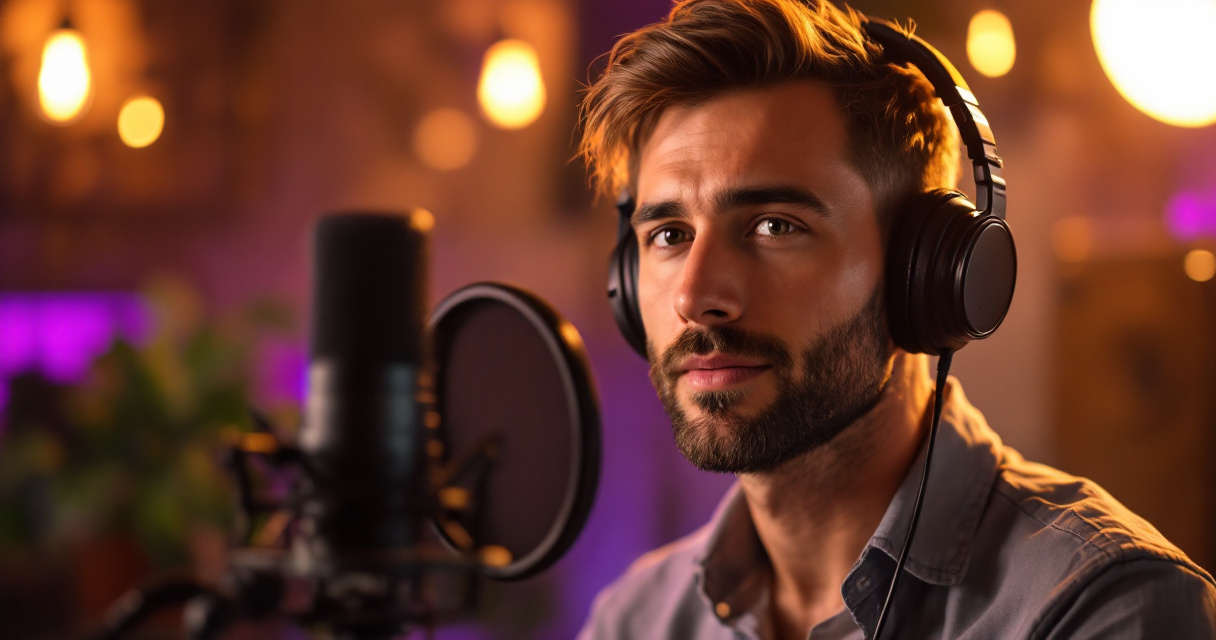
Pro Tip: The best light for podcast headshots comes from a large, soft source positioned at a 45-degree angle from your face. This creates dimension without harsh shadows.
Natural window light remains the most accessible option for podcasters shooting at home. Position yourself facing a large window during golden hour (the hour after sunrise or before sunset) for warm, flattering illumination. Overcast days actually work better than direct sunlight because clouds act as a giant softbox.
Three-Point Lighting for Home Studios
If you record in a dedicated space without good natural light, invest in a basic three-point lighting setup:
- Key light: Your main light source, positioned 45 degrees to one side of your face
- Fill light: A softer light on the opposite side to reduce shadows (can be a reflector)
- Hair light: A small light behind you to separate your outline from the background
Ring lights work adequately for video calls but create unnatural catchlights in your eyes for still photography. They produce that distinctive "donut" reflection that immediately signals "influencer content" rather than professional media.
Common Lighting Mistakes to Avoid
- Overhead lighting only: Creates unflattering shadows under eyes and nose
- Backlit without fill: Turns your face into a silhouette
- Mixed color temperatures: Combining warm and cool lights creates skin tone issues
- On-camera flash: Flattens facial features and creates red-eye
Composition and Posing for Maximum Impact
Your headshot composition affects how viewers perceive your personality and expertise before hearing a single word of your podcast. Different framings communicate different messages.
Framing Options Compared
Which Framing Works Best
| Framing Style | Best For | Conveys |
|---|---|---|
| Tight headshot | Interview/talk shows | Intimacy, authority |
| Head and shoulders | Business/educational | Professionalism, approachability |
| Environmental portrait | Niche/hobby shows | Context, authenticity |
| Action shot | Sports/adventure | Energy, expertise |
For most podcast genres, a head-and-shoulders composition strikes the ideal balance. It shows enough of you to communicate body language while keeping your face large enough to remain recognizable at thumbnail size.
Body Language That Builds Trust
Small adjustments in posture dramatically affect how your headshot reads:
- Slight head tilt: Appears more approachable and curious
- Squared shoulders: Projects confidence and authority
- Genuine smile: Studies show asymmetrical smiles read as more authentic
- Hands visible: Including hands in frame (chin rest, crossed arms) adds personality
Avoid the stiff "driver's license photo" pose. Instead, imagine you are mid-conversation with your ideal listener. That mental shift naturally produces more engaging expressions.
AI-Generated Headshots: The 2026 Reality
AI headshot technology has matured significantly since its early days of uncanny valley disasters. Modern platforms produce remarkably natural results when they focus on capturing genuine expressions rather than applying heavy filters.
The Looktara Lens platform exemplifies this evolution. Unlike older AI tools that smoothed skin into plastic-looking textures or generated awkward body positioning, current technology maintains natural details while enhancing professional polish. The key differentiator is creative control; you can guide the output rather than accepting whatever the algorithm decides.
When AI Headshots Make Sense
AI-generated headshots work exceptionally well for podcasters who:
- Need professional imagery quickly (launching a new show)
- Want multiple variations for A/B testing
- Lack access to professional photographers in their area
- Prefer controlling costs while maintaining quality
- Need consistent styling across multiple team members
The Looktara Lens offers particular value for podcasters because you can generate variations matching different moods; serious and authoritative for business content, warm and approachable for lifestyle shows.
What to Look for in AI Headshot Quality
Not all AI headshot tools deliver equal results. Evaluate options based on:
- Expression naturalness: Do subjects look genuinely engaged or robotically posed?
- Skin texture: Real skin has pores, subtle variations, and natural coloring
- Eye rendering: Eyes should have realistic catchlights and depth
- Background options: Professional settings without obvious AI artifacts
- Output resolution: Must meet Spotify's 3000 x 3000 minimum
Branding Your Podcast Headshot for Recognition
Your headshot does not exist in isolation. It becomes part of your overall podcast brand identity, which means visual consistency matters across all touchpoints.
Color Psychology in Podcast Branding
Background colors in your headshot communicate subconscious messages:
- Blue tones: Trust, professionalism, calm (ideal for business/news)
- Orange/yellow: Energy, optimism, creativity (great for entertainment)
- Green: Growth, health, balance (perfect for wellness content)
- Dark/moody: Sophistication, drama, intensity (true crime, investigative)
- Neutral/white: Clean, modern, minimalist (tech, productivity)
Choose colors that align with your podcast's subject matter and target audience expectations.
Maintaining Consistency Across Platforms
Your Spotify headshot should visually connect to your:
- YouTube channel banner and thumbnails
- Social media profile pictures
- Website header images
- Newsletter graphics
- Promotional materials
This does not mean using the identical image everywhere. Rather, maintain consistent color palette, styling, and energy across variations. Listeners who discover you on Spotify should immediately recognize your brand when they find your Instagram.
Testing and Optimizing Your Podcast Headshot
The best headshot is the one that converts listeners, and you cannot know what converts without testing. Treat your podcast artwork like a marketing asset that deserves data-driven optimization.
A/B Testing Strategies
While Spotify does not offer native A/B testing for podcast artwork, you can still gather valuable data:
- Run two variations for set time periods (two weeks each minimum)
- Track new subscriber rates during each period
- Use Spotify for Podcasters analytics to monitor click-through patterns
- Survey your audience directly about preferences
- Test variations on social media before committing to Spotify
Metrics That Matter
Important: Focus on conversion metrics (new followers, episode starts from browse) rather than vanity metrics (total impressions). A headshot that gets fewer views but higher conversion rates outperforms one that looks popular but does not drive subscriptions.
Review your Spotify for Podcasters dashboard monthly to correlate artwork changes with performance shifts. Document what you change and when so you can attribute results accurately.
What to Expect in Podcast Visual Branding Through 2027
Podcast platforms continue evolving toward more visual experiences. Spotify's investment in video podcasts signals where the industry heads, and your static headshot strategy should anticipate these changes.
Emerging Trends
- Animated thumbnails: Spotify testing subtle motion in podcast artwork
- AI-personalized displays: Different listeners seeing different artwork variations
- Video-first presentation: Full video podcasts becoming standard rather than optional
- Interactive elements: Clickable areas within podcast artwork for deeper engagement
Podcasters who invest in quality visual assets now position themselves ahead of these shifts. The Looktara Lens and similar platforms will likely expand to support animated and video-integrated headshot options as demand grows.
Future-Proofing Your Visual Identity
Shoot or generate your headshot at the highest possible resolution. Capture multiple expressions and angles during any photo session. Build a library of professional imagery you can adapt as platform requirements evolve. Today's static square image might become tomorrow's animated loop or video thumbnail starting frame.
Conclusion
Your Spotify podcast headshot represents far more than a simple profile picture. It is your first conversation with every potential listener, your visual promise of the quality they will receive when they press play, and your primary tool for standing out in an increasingly crowded audio marketplace.
Start by auditing your current artwork against the technical requirements and composition principles covered here. Test your image at thumbnail size on your phone. If your face becomes unrecognizable or your expression feels flat, you have work to do.
For podcasters ready to upgrade quickly without scheduling photographer appointments, The Looktara Lens offers a simplify path to professional headshots that capture genuine personality. Whatever route you choose, prioritize authenticity over perfection. Listeners connect with real humans, not airbrushed avatars.
Your next step: Take one action today. Schedule a photo session, explore AI headshot options, or simply test your current artwork at multiple sizes. Your future subscribers are scrolling right now, and the right headshot could be the difference between a skip and a subscribe.