
Your email signature is tiny, but it shapes first impressions fast. A signature block, defined by Wikipedia as a personalized block of text automatically appended to the bottom of an email, becomes much stronger when it includes a clear, professional photo. For job seekers, founders, freelancers, and creators, a polished AI-generated headshot can upgrade that first impression without booking a studio shoot. Using The Looktara Lens, you can create a professional AI photo that fits email signatures, LinkedIn, and personal branding, then pair it with assets like a resume headshot generator or a LinkedIn post AI generator to keep your visual identity consistent.
Why a professional AI photo works so well in an email signature
Most people decide how formal, trustworthy, or polished you look in seconds. Your email signature photo doesn't need to be dramatic; it needs to look believable, current, and easy to recognize at a very small size.
Competitor pages in this search result set focus heavily on speed, free tools, or volume claims. What's usually missing is practical guidance for the actual use case: email signatures are small, compressed, and often viewed on mobile. That means the best AI photo for this purpose is not the most stylized one. It's the one that stays clear at 48 to 96 pixels and still looks like you.
Key takeaway: For email signatures, clarity beats creativity. A simple head-and-shoulders image usually performs better than a dramatic AI portrait.
What makes an email-signature photo different
A good email-signature image should be:
- Cropped from the chest or shoulders up
- Centered on your face
- Lit evenly, with no harsh shadow on one side
- Set against a plain or lightly blurred background
- Dressed for your actual field, not for a fantasy corporate stock photo
If you work across channels, consistency matters. The same headshot can support your email signature, website hero, and pitch materials. That's where related tools like a website hero AI generator or a pitch deck slide AI generator can help extend one visual style across your brand.
Why AI headshots keep growing in professional use
Research on generative AI in work settings shows why these tools are spreading. A 2023 paper in the Human Resource Management Journal examined how generative AI is affecting hiring and workplace practices, highlighting its growing role in professional workflows and personal presentation Budhwar, Chowdhury, and Wood, 2023. Another 2023 survey in the IEEE Open Journal of the Computer Society reviewed AI-generated content, its uses, and its challenges, showing how mainstream generative systems have become across content tasks Wang, Pan, and Yan, 2023.
That doesn't mean every AI image is a smart choice. It means employers, clients, and customers are already seeing AI-assisted content often, so your image needs to feel authentic, not overly processed.
What makes an email-signature photo different
What makes an email-signature photo different
A good email-signature image should be:
- Cropped from the chest or shoulders up
- Centered on your face
- Lit evenly, with no harsh shadow on one side
- Set against a plain or lightly blurred background
- Dressed for your actual field, not for a fantasy corporate stock photo
If you work across channels, consistency matters. The same headshot can support your email signature, website hero, and pitch materials. That's where related tools like a website hero AI generator or a pitch deck slide AI generator can help extend one visual style across your brand.
Why AI headshots keep growing in professional use
Why AI headshots keep growing in professional use
Research on generative AI in work settings shows why these tools are spreading. A 2023 paper in the Human Resource Management Journal examined how generative AI is affecting hiring and workplace practices, highlighting its growing role in professional workflows and personal presentation Budhwar, Chowdhury, and Wood, 2023. Another 2023 survey in the IEEE Open Journal of the Computer Society reviewed AI-generated content, its uses, and its challenges, showing how mainstream generative systems have become across content tasks Wang, Pan, and Yan, 2023.
That doesn't mean every AI image is a smart choice. It means employers, clients, and customers are already seeing AI-assisted content often, so your image needs to feel authentic, not overly processed.
How to create an AI headshot that still looks like you
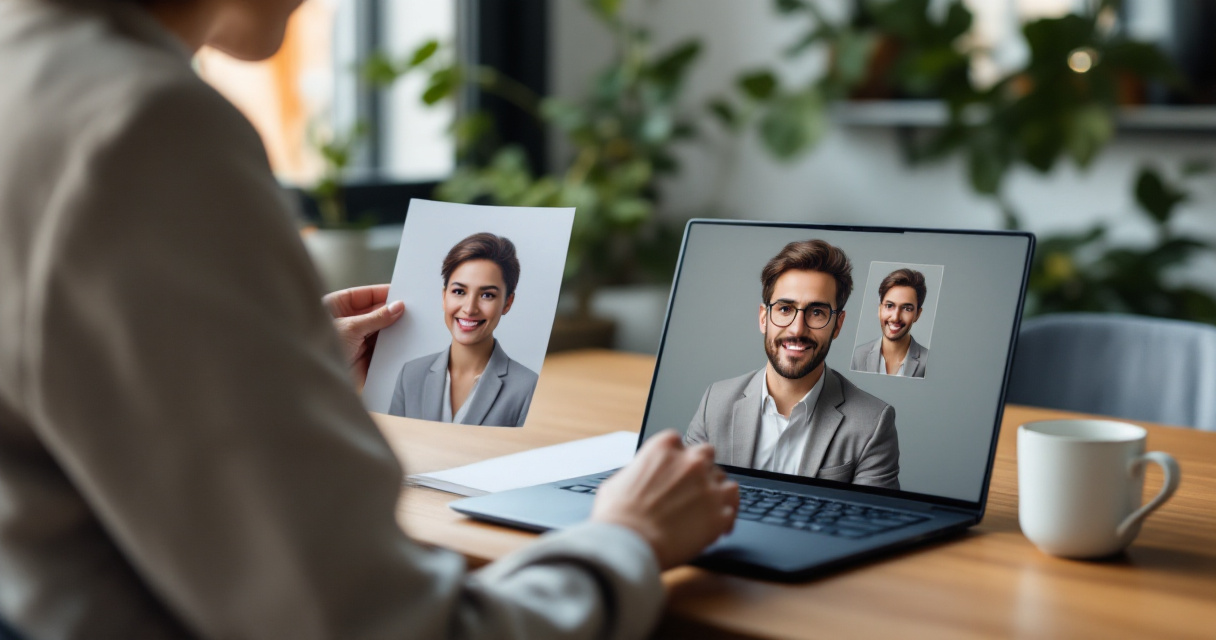
The fastest way to ruin trust is to use an AI photo that looks nothing like your real face. A professional result starts before generation, with the images you upload and the style you ask for.
Start with source photos that reduce AI errors
Use recent photos with:
- Natural lighting
- Neutral expressions plus one slight smile
- Different angles, but mostly front-facing
- No heavy filters, sunglasses, or face-obscuring hair
- Clothing similar to what you'd wear in business email
A useful rule is simple: if a friend would recognize you instantly, the source photo is probably good enough.
Best style prompts for business email use
Ask for results that are:
- Professional headshot
- Soft natural light
- Neutral background
- Realistic skin texture
- Business casual or formal clothing
- Chest-up composition
- Direct eye contact
Avoid prompts that push glamour, cinematic lighting, extreme bokeh, luxury-office backgrounds, or fashion-magazine styling. Those can look impressive full-screen and still fail badly once shrunk into a signature.
Comparison table for choosing the right AI photo style
| Style choice | Best for | Risk in email signature |
|---|---|---|
| Neutral studio-style headshot | Most professionals, job seekers, consultants | Low risk, stays readable small |
| Business casual lifestyle portrait | Freelancers, founders, creators | Can work well if background stays clean |
| Highly stylized corporate portrait | Personal branding campaigns | Often looks artificial at small size |
| Glamour or cinematic edit | Dating or creator profiles | Usually too dramatic for business email |
Using The Looktara Lens can help if you want one image set adapted across several platforms, instead of generating separate looks that don't match. That matters when your email signature, LinkedIn, and sales materials all need the same face, tone, and level of formality.
Start with source photos that reduce AI errors
Start with source photos that reduce AI errors
Use recent photos with:
- Natural lighting
- Neutral expressions plus one slight smile
- Different angles, but mostly front-facing
- No heavy filters, sunglasses, or face-obscuring hair
- Clothing similar to what you'd wear in business email
A useful rule is simple: if a friend would recognize you instantly, the source photo is probably good enough.
Best style prompts for business email use
Best style prompts for business email use
Ask for results that are:
- Professional headshot
- Soft natural light
- Neutral background
- Realistic skin texture
- Business casual or formal clothing
- Chest-up composition
- Direct eye contact
Avoid prompts that push glamour, cinematic lighting, extreme bokeh, luxury-office backgrounds, or fashion-magazine styling. Those can look impressive full-screen and still fail badly once shrunk into a signature.
Comparison table for choosing the right AI photo style
Comparison table for choosing the right AI photo style
| Style choice | Best for | Risk in email signature |
|---|---|---|
| Neutral studio-style headshot | Most professionals, job seekers, consultants | Low risk, stays readable small |
| Business casual lifestyle portrait | Freelancers, founders, creators | Can work well if background stays clean |
| Highly stylized corporate portrait | Personal branding campaigns | Often looks artificial at small size |
| Glamour or cinematic edit | Dating or creator profiles | Usually too dramatic for business email |
Using The Looktara Lens can help if you want one image set adapted across several platforms, instead of generating separate looks that don't match. That matters when your email signature, LinkedIn, and sales materials all need the same face, tone, and level of formality.
The right size, crop, and file setup for sharp signature photos
A great AI headshot can still look blurry or awkward if you export it wrong. Email clients compress images, and many signatures display as tiny circles or squares.
Use dimensions built for small screens
For most email signatures in 2026, a safe setup is:
- Display size: 48 x 48 to 96 x 96 pixels
- Export size: 200 x 200 to 400 x 400 pixels
- Shape: square source image, even if displayed as a circle
- File type:
PNGfor crisp edges,JPEGif you need smaller file size
Keep file size modest so the signature loads fast. You don't need a huge image for email. Oversized files can slow loading and sometimes trigger image blocking.
Crop for recognition, not fashion
Your face should fill about 60 to 70 percent of the frame. Too wide, and people can't identify you. Too tight, and the image feels cramped, especially inside circular masks.
Good crop choices include:
- Top of shoulders to just above head
- Eyes placed slightly above center
- Small amount of empty space around hair and shoulders
Quick rule: If your facial features are still clear when the image is viewed at thumbnail size, your crop is probably right.
Match the photo to the rest of your signature
Your photo should work with your name, title, company, logo, and links, not compete with them. If your branding is clean and minimal, keep the image plain too. If you already use branded visuals in marketing, a matching asset, such as a logo AI generator for brand consistency, can make the full signature feel intentional rather than pieced together.
Use dimensions built for small screens
Use dimensions built for small screens
For most email signatures in 2026, a safe setup is:
- Display size: 48 x 48 to 96 x 96 pixels
- Export size: 200 x 200 to 400 x 400 pixels
- Shape: square source image, even if displayed as a circle
- File type:
PNGfor crisp edges,JPEGif you need smaller file size
Keep file size modest so the signature loads fast. You don't need a huge image for email. Oversized files can slow loading and sometimes trigger image blocking.
Crop for recognition, not fashion
Crop for recognition, not fashion
Your face should fill about 60 to 70 percent of the frame. Too wide, and people can't identify you. Too tight, and the image feels cramped, especially inside circular masks.
Good crop choices include:
- Top of shoulders to just above head
- Eyes placed slightly above center
- Small amount of empty space around hair and shoulders
Quick rule: If your facial features are still clear when the image is viewed at thumbnail size, your crop is probably right.
Match the photo to the rest of your signature
Match the photo to the rest of your signature
Your photo should work with your name, title, company, logo, and links, not compete with them. If your branding is clean and minimal, keep the image plain too. If you already use branded visuals in marketing, a matching asset, such as a logo AI generator for brand consistency, can make the full signature feel intentional rather than pieced together.
Common mistakes that make AI signature photos look fake or risky
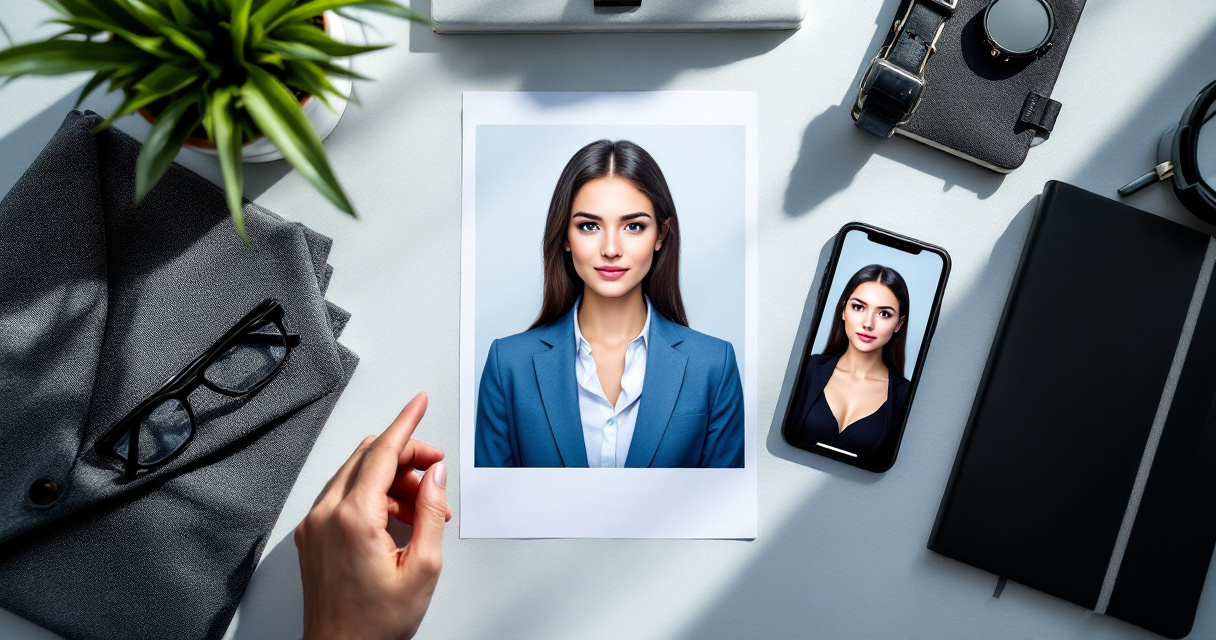
Some AI headshots fail for visual reasons. Others fail because they create trust or security concerns. That second part gets overlooked.
Red flags people notice immediately
Avoid these common problems:
- Teeth, earrings, or glasses rendered unevenly
- Skin smoothed so much it looks plastic
- Hands or shoulders appearing warped in the crop
- Background text or office objects that make no sense
- Clothing details that shift unnaturally at the collar or lapel
If any of those show up, don't use the image in client-facing email. Small photos hide some flaws, but not the weird ones.
Why trust matters when AI images enter business communication
A 2022 review in IEEE Access on explainable AI in cybersecurity focused on transparency and trust in AI systems Zhang, Al Hamadi, and Damiani, 2022. While it was not about headshots specifically, the point carries over: when AI affects communication, explainability and credibility matter.
For practical use, that means your AI photo should represent you honestly. If you look 15 years younger, drastically slimmer, or styled in a way you'd never appear on a video call, people may feel misled.
When you should skip AI and use a real photo instead
AI isn't always the best option. Use a standard photo if:
- Your company has strict identity or compliance rules
- You work in law, finance, government, or regulated healthcare and your firm prefers literal representation
- You already have a strong recent headshot
- The AI outputs keep changing facial features
Using the The Looktara Lens platform makes sense when you need consistency and speed, but realism should stay the priority. A believable image beats a flashy one every time.
Red flags people notice immediately
Red flags people notice immediately
Avoid these common problems:
- Teeth, earrings, or glasses rendered unevenly
- Skin smoothed so much it looks plastic
- Hands or shoulders appearing warped in the crop
- Background text or office objects that make no sense
- Clothing details that shift unnaturally at the collar or lapel
If any of those show up, don't use the image in client-facing email. Small photos hide some flaws, but not the weird ones.
Why trust matters when AI images enter business communication
Why trust matters when AI images enter business communication
A 2022 review in IEEE Access on explainable AI in cybersecurity focused on transparency and trust in AI systems Zhang, Al Hamadi, and Damiani, 2022. While it was not about headshots specifically, the point carries over: when AI affects communication, explainability and credibility matter.
For practical use, that means your AI photo should represent you honestly. If you look 15 years younger, drastically slimmer, or styled in a way you'd never appear on a video call, people may feel misled.
When you should skip AI and use a real photo instead
When you should skip AI and use a real photo instead
AI isn't always the best option. Use a standard photo if:
- Your company has strict identity or compliance rules
- You work in law, finance, government, or regulated healthcare and your firm prefers literal representation
- You already have a strong recent headshot
- The AI outputs keep changing facial features
Using the The Looktara Lens platform makes sense when you need consistency and speed, but realism should stay the priority. A believable image beats a flashy one every time.
A simple 2026 workflow for creating, testing, and updating your photo
You don't need a complicated process. What you need is one clean workflow that produces a reliable image and checks how it performs in real email use.
A four-step workflow that saves time
- Gather 8 to 15 recent selfies or casual portraits in natural light.
- Generate several realistic headshots with neutral backgrounds.
- Test the top 3 options inside your actual email signature at mobile and desktop size.
- Ask two people who know you which image looks most like you and most professional.
That last step matters more than people think. AI images can look polished to you and off-putting to everyone else.
Keep your branding connected across channels
If you're refreshing your email signature, it's smart to update related assets at the same time. For example, you can pair your new headshot with a professional LinkedIn content visual, a clean quote-post design, or even a YouTube thumbnail generator if your personal brand extends into video.
What to expect next for AI professional photos
Heading into 2027, expect AI headshot tools to improve in identity consistency, background control, and small-format export options. The real shift will not be more dramatic portraits. It will be better control over realistic, channel-specific images, including headshots tuned for signatures, resumes, team pages, and social profiles.
That makes now a good time to build a reusable visual kit rather than a single one-off image. Your email signature photo should be one piece of a wider personal brand system.
A four-step workflow that saves time
A four-step workflow that saves time
- Gather 8 to 15 recent selfies or casual portraits in natural light.
- Generate several realistic headshots with neutral backgrounds.
- Test the top 3 options inside your actual email signature at mobile and desktop size.
- Ask two people who know you which image looks most like you and most professional.
That last step matters more than people think. AI images can look polished to you and off-putting to everyone else.
Keep your branding connected across channels
Keep your branding connected across channels
If you're refreshing your email signature, it's smart to update related assets at the same time. For example, you can pair your new headshot with a professional LinkedIn content visual, a clean quote-post design, or even a YouTube thumbnail generator if your personal brand extends into video.
What to expect next for AI professional photos
What to expect next for AI professional photos
Heading into 2027, expect AI headshot tools to improve in identity consistency, background control, and small-format export options. The real shift will not be more dramatic portraits. It will be better control over realistic, channel-specific images, including headshots tuned for signatures, resumes, team pages, and social profiles.
That makes now a good time to build a reusable visual kit rather than a single one-off image. Your email signature photo should be one piece of a wider personal brand system.
Conclusion
A professional AI photo for your email signature should do one job well: help people trust the person behind the message. Keep it realistic, crop it tightly, export it for small screens, and test it before sending it to clients or recruiters. If you want a faster way to create a polished, consistent look across email, LinkedIn, resumes, and brand content, start with The Looktara Lens and build your image set around one believable headshot that actually looks like you.
Generated by EarlySEO.com